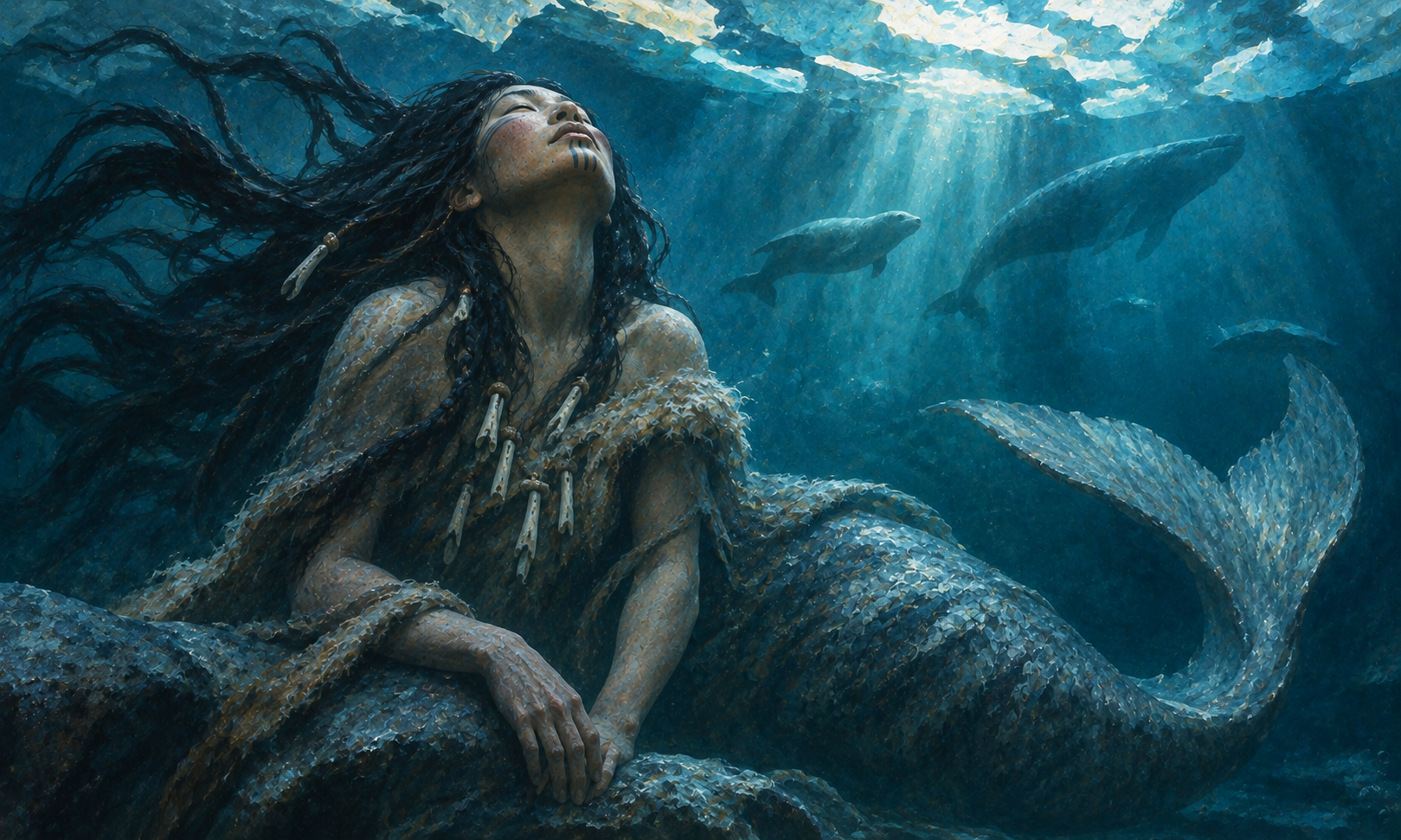
Deep beneath the icy waters of the Arctic Ocean lives one of the most powerful figures in Inuit mythology. Known widely as Sedna, this mysterious sea spirit governs the marine animals upon which generations of Inuit communities have depended for survival.
Her story is one of betrayal, suffering and extraordinary transformation. In many versions, a young woman is cast into the ocean by her own father, only to become the powerful guardian of the creatures living beneath its surface.
Yet Sedna is not a single, universally defined character. Across Inuit communities, she is known by different names, and the stories surrounding her vary considerably.
Who Is Sedna in Inuit Mythology?
Sedna is commonly described as the mother or guardian of sea animals, particularly seals, walruses and whales. She is believed to inhabit the depths of the ocean, where she exercises considerable influence over the availability of marine life.
Although frequently called a goddess in English-language accounts, Sedna is also understood as a powerful spiritual being. In her essay The Problem With Sedna, Inuk writer Rachel Attituq Qitsualik challenges the conventional goddess label, emphasising the figure’s association with fear and tragedy.
Her many names reflect the diversity of Inuit storytelling. Nuliajuk, Takannaaluk and Uinigumasuittuq are among the names associated with the Sea Woman, although their meanings and usage differ between communities.
Unlike many mythological figures whose stories were preserved in written texts, Sedna’s traditions developed through oral storytelling. Consequently, there is no single authoritative account of her origins or appearance.
The Story of Sedna
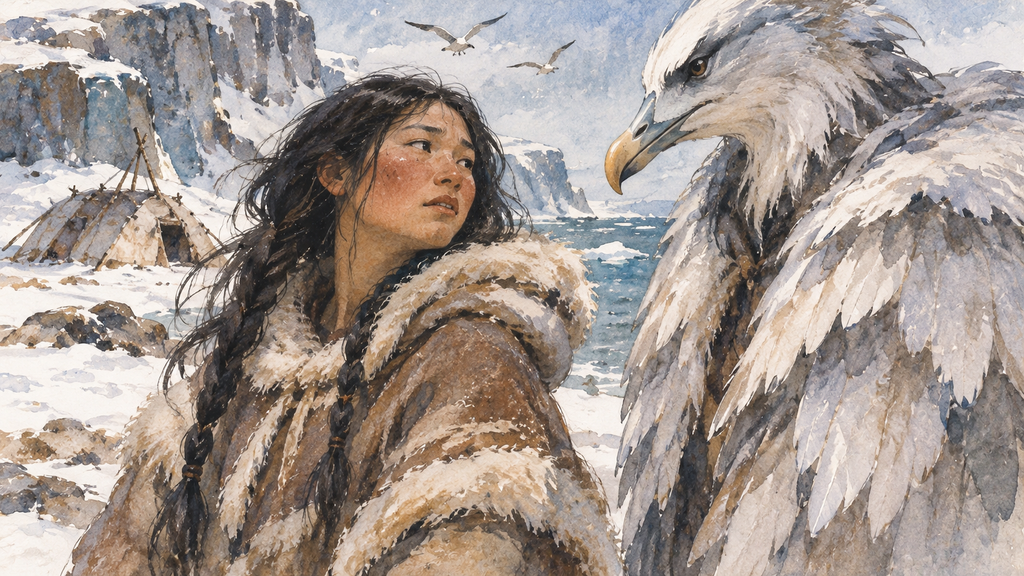
One well-known version begins with a young woman living alongside her father on the Arctic coast.
A mysterious stranger arrives and offers to marry her, promising a comfortable life with abundant food. She agrees, but soon discovers that her husband is actually a bird, often identified as a fulmar.
Instead of the prosperous existence she expected, she finds herself isolated and miserable.
Eventually, her father comes to rescue her, taking her aboard his boat. However, the bird husband discovers their escape and summons a violent storm.
Terrified that their boat will sink, the father throws his daughter into the freezing sea.
Desperate to survive, she clings to the side of the vessel. Rather than helping her, her father cuts off her fingers, forcing her beneath the waves.
It is this terrible act that brings about one of the most remarkable transformations in Inuit mythology.
How Sedna Became the Mother of Sea Animals
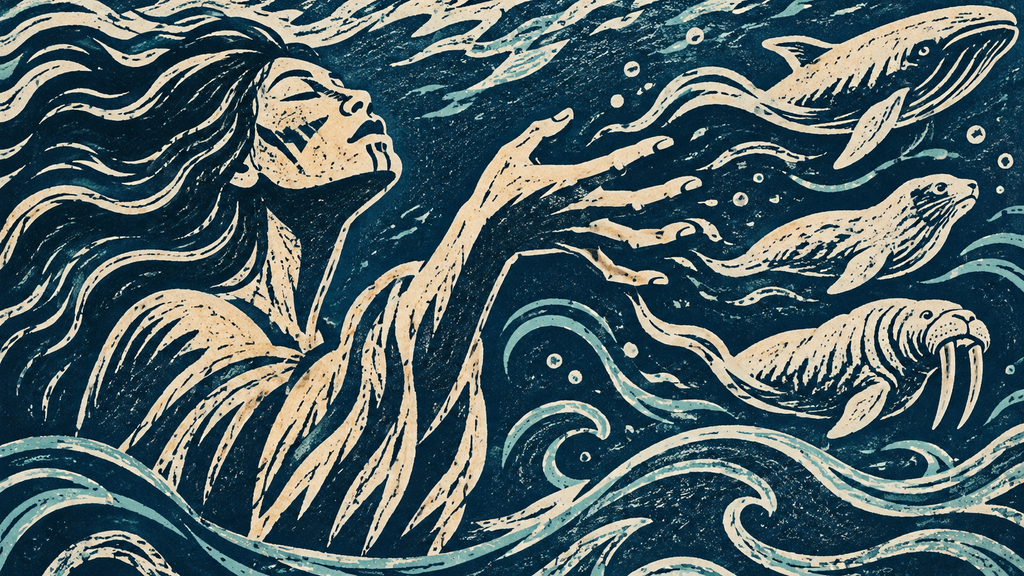
As Sedna’s severed fingers fall into the ocean, they transform into marine animals.
In a version associated with Igloolik, different finger joints become seals, walruses and whales. Other tellings describe the transformation differently, but the connection between Sedna’s suffering and the creation of sea animals remains a recurring feature.
Sedna herself sinks to the ocean floor, where she becomes the powerful Sea Woman.
Her transformation gives her authority over the animals created from her body. In many traditions, their availability depends upon her relationship with the human communities hunting them.
The story therefore explains more than the origins of Arctic marine life. It also expresses the profound connection between people, animals and the unpredictable environment upon which survival depends.
Sedna and Inuit Spiritual Traditions
In traditional accounts, Sedna can withhold sea animals when human beings violate important rules or fail to observe the proper relationships between themselves and the creatures they hunt.
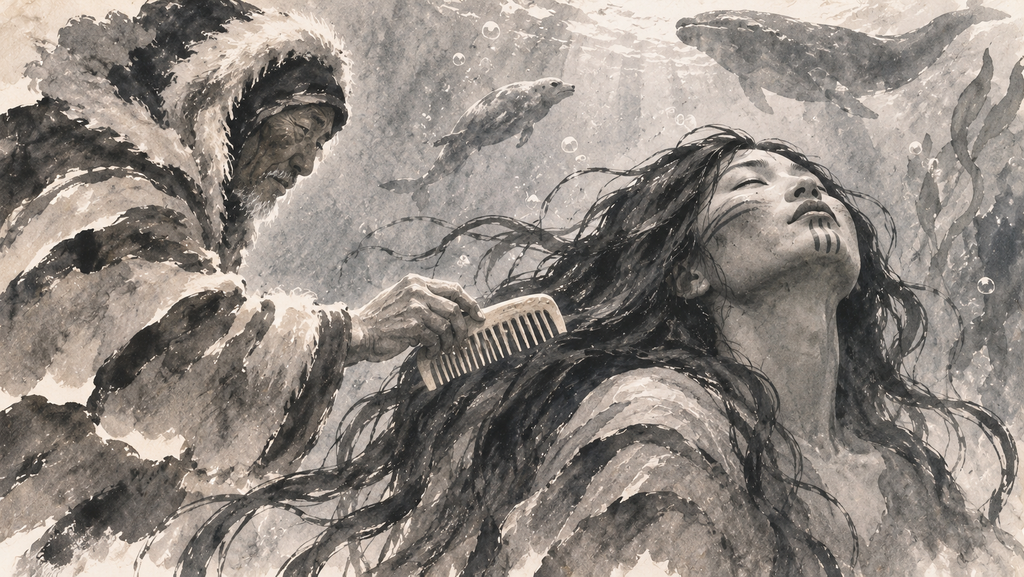
When animals become scarce, an angakkuq, or Inuit spiritual specialist, may undertake a spiritual journey to visit the Sea Woman.
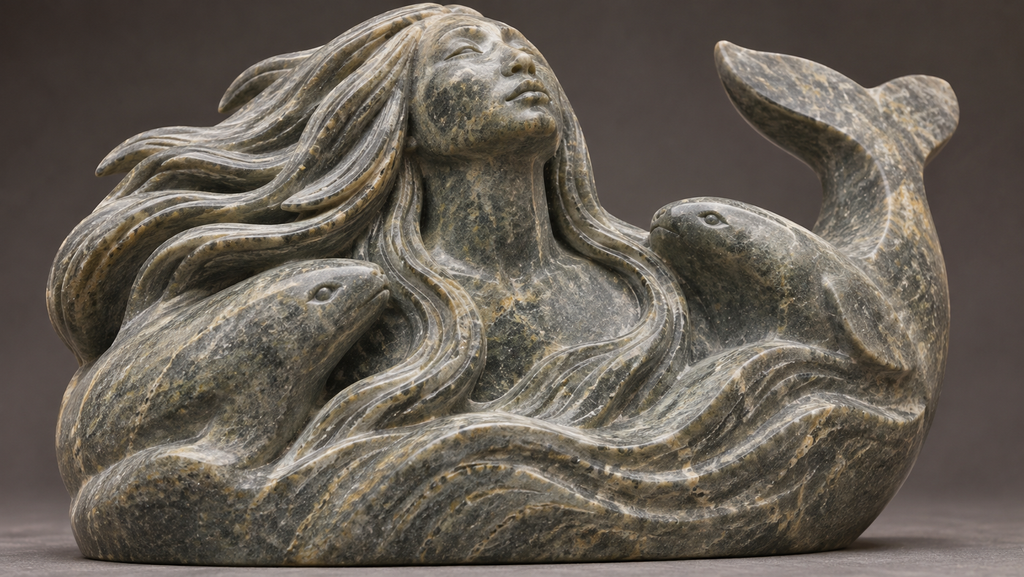
One particularly memorable element involves Sedna’s tangled hair.
Because she has lost her fingers, she cannot comb it herself. In certain traditions, the visiting angakkuq must clean or arrange her hair, helping to restore harmony between Sedna and the human world.
Once appeased, she may release the animals again, allowing successful hunting to resume.
These traditions reflect the importance of respecting animals, observing established customs and recognising the limits of human control over nature.
They also offer an interesting contrast with other figures in Inuit storytelling.
The Amarok wolf is associated with the dangers of hunting alone, while the Qallupilluit inhabit dangerous Arctic waters and are often associated with warnings to children.
Although their stories serve different purposes, all three reflect aspects of life in the Arctic environment.
Different Versions of Sedna’s Story
Although the account involving the bird husband and her father’s betrayal is particularly well known, other versions differ substantially.
Some describe Sedna marrying a dog, while others portray her as a young woman unwilling to marry. The circumstances leading to her transformation also vary.
The Winnipeg Art Gallery’s Nuliajuk exhibition explores these regional differences and the many names associated with the Sea Woman.
These variations are not simply inconsistencies. They reflect the distinct storytelling traditions, languages and experiences of Inuit communities across the Arctic.
Sedna also remains an important subject in Inuit art. Contemporary artists have depicted her in numerous forms, sometimes as a woman with a fishlike tail and sometimes as a more mysterious being associated with marine animals.
The Inuit art specialists at Feheley Fine Arts provide examples of how her story continues to inspire artistic interpretations.
Her enduring presence in storytelling and visual culture demonstrates the continuing significance of the Sea Woman.
Get in Touch
Sedna’s story is a striking example of how mythology can express the relationship between humanity and the natural world.
If you’ve enjoyed learning about Inuit mythology, you might also be interested in the Mahaha, a frightening figure associated with the frozen Arctic wilderness.
Do you know another version of the Sea Woman’s story, or a similar figure from another mythology?
We’d love to hear from you at richard@mythologyplanet.com.