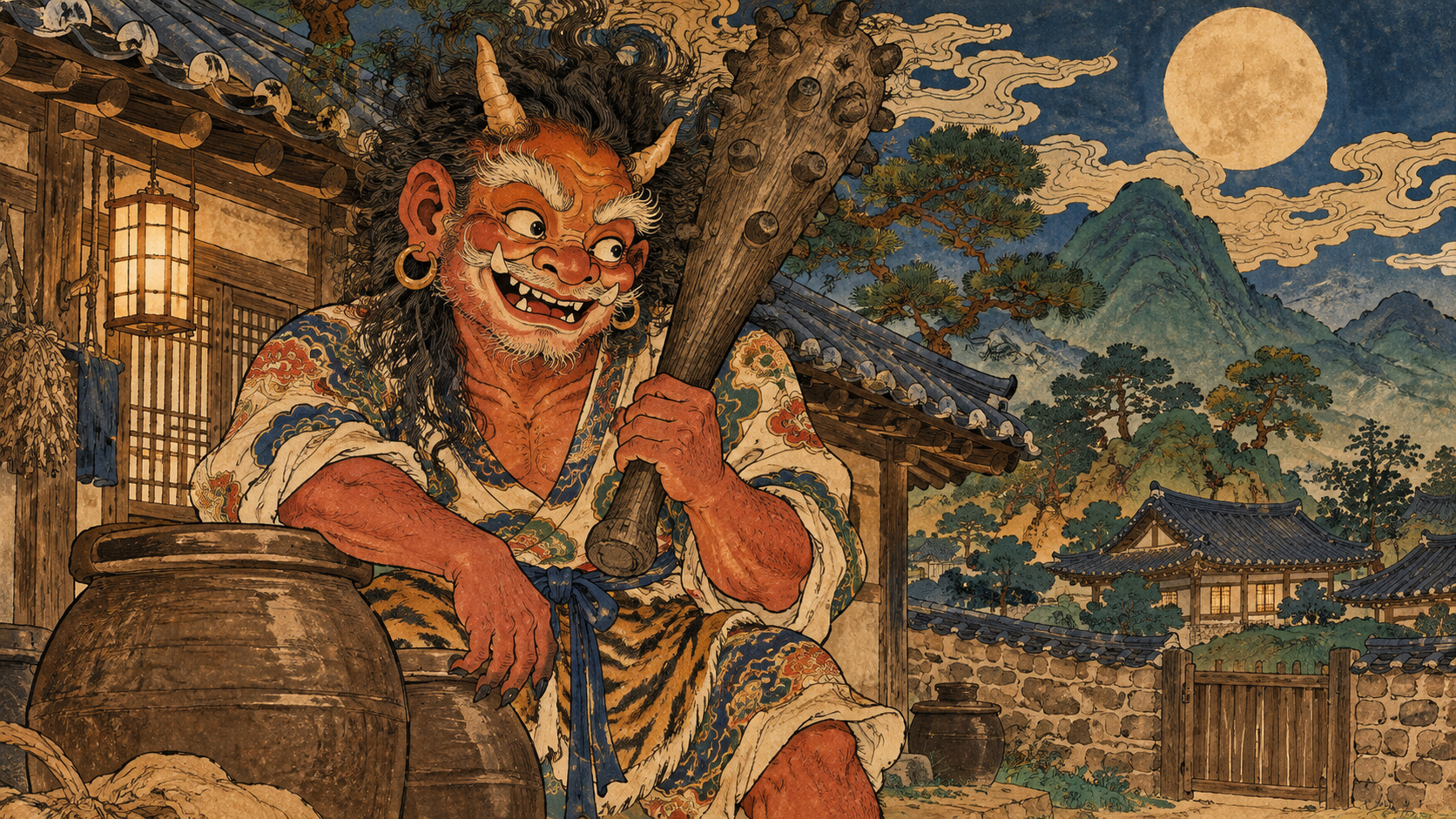
Imagine walking home through the Korean countryside at night when a stranger challenges you to a wrestling match. You accept, only to discover that your opponent possesses extraordinary strength and has no intention of letting you leave.
You’ve just encountered a dokkaebi.
Dokkaebi (도깨비) are among the most intriguing supernatural beings in Korean folklore. Often translated as Korean goblins, they can be mischievous, frightening, generous or surprisingly foolish. Some bring wealth and good fortune, while others delight in tormenting unsuspecting travellers.
What makes them particularly interesting is that they’re not simply monsters to be feared. Their behaviour is unpredictable, and their stories reveal a great deal about Korean beliefs concerning luck, morality and the supernatural.
What Are Dokkaebi in Korean Folklore?
Dokkaebi are supernatural beings with remarkable powers who frequently interact with humans. Unlike the restless spirits of deceased people, they are not generally understood to be ghosts. Korean folklore has a separate tradition of such spirits, known as gwisin.
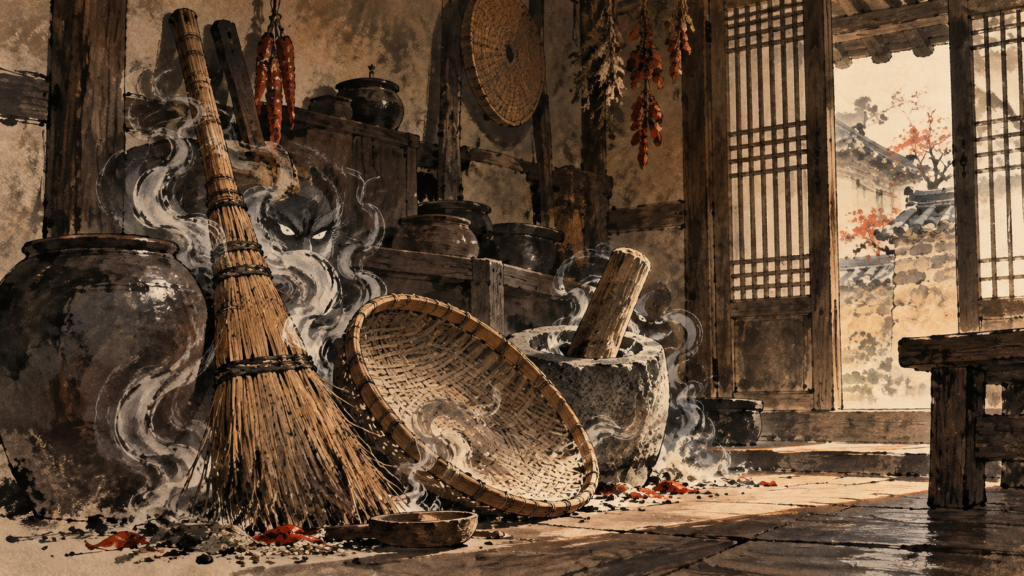
One of the most distinctive beliefs about dokkaebi concerns their origins. According to traditional accounts, they can emerge from old, discarded household objects, including brooms, sieves, pestles and fire pokers. Some traditions particularly associate their creation with objects stained by human blood.
An ordinary object becoming a supernatural being might sound unusual, but it reflects a world in which familiar surroundings could conceal extraordinary powers.
According to the National Folk Museum of Korea, dokkaebi can frighten or tease humans, but they can also bring prosperity and good fortune. This unpredictability is one of their defining characteristics, making them rather more complicated than the word goblin might suggest.
A dokkaebi might reward a person with riches one evening and make another person’s life thoroughly miserable the next.
What Do Dokkaebi Look Like?
There is no single appearance shared by every dokkaebi.
Traditional descriptions and artistic representations vary considerably, although some feature bulging eyes, enormous mouths, sharp teeth, horns or hairy bodies.
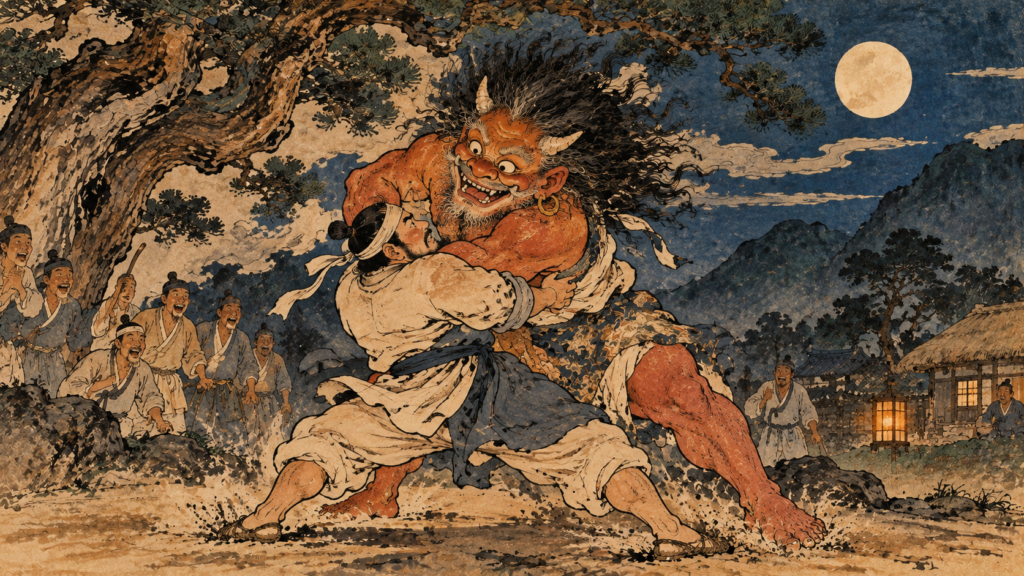
Other stories describe dokkaebi challenging travellers to wrestling matches that continue through the night. Interestingly, Japan’s kappa also enjoy wrestling with humans, although these water-dwelling yōkai have quite different origins and characteristics. In both traditions, human ingenuity can overcome supernatural strength.
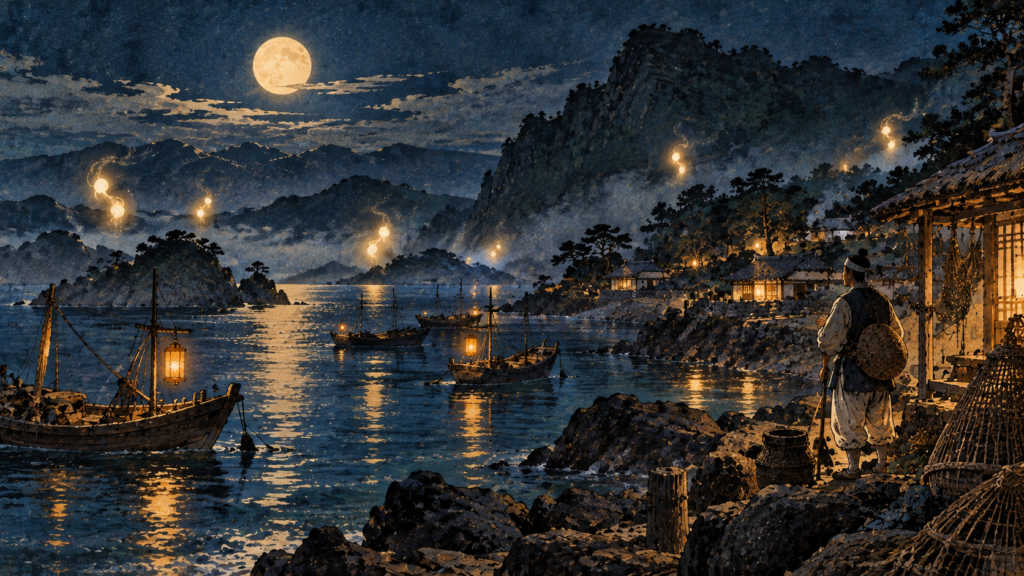
One-legged dokkaebi also feature in Korean folklore, as do beings that reveal themselves through mysterious lights.
The horned, fearsome face familiar from modern illustrations is only one interpretation. Some imagery associated with dokkaebi has also been influenced by representations of Japanese oni, so it is worth being cautious about treating every horned monster as an authentic traditional Korean dokkaebi.
Their varied appearances are fitting for creatures whose personalities are equally difficult to predict.
What Powers Do Dokkaebi Have?
Dokkaebi possess extraordinary strength and can perform feats beyond human ability. Folktales credit them with creating land, producing lavish feasts and bringing prosperity to households or entire communities.
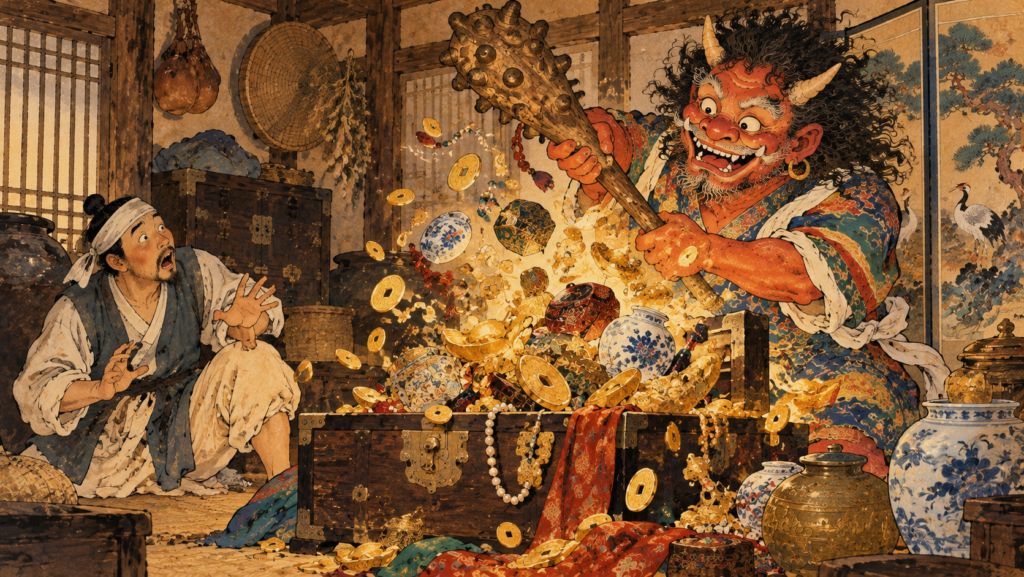
Among their most famous possessions is the dokkaebi bangmangi, a magical club capable of producing valuable objects or other desirable things.
As the Academy of Korean Studies explains, dokkaebi are closely associated with supernatural strength, wealth and prosperity. Yet their powers are frequently accompanied by a distinctly human weakness: they can be surprisingly gullible.
Another well-known object is the dokkaebi gamtu, a magical cap associated with invisibility.
Yet physical strength and supernatural abilities are only part of their character. Dokkaebi enjoy human company, particularly singing, dancing and wrestling. Their fondness for contests sometimes proves their undoing, since a clever human can exploit their stubbornness or foolishness.
Dokkaebi also have a more serious place in traditional beliefs. In some communities, rituals sought their assistance with successful harvests, plentiful catches of fish or protection from misfortune.
They were therefore more than characters in entertaining stories. Depending on the circumstances, people might regard them as sources of prosperity or supernatural trouble.
Famous Dokkaebi Stories
One particularly entertaining example is the tale of the magical dokkaebi club, recorded in the Encyclopedia of Korean Folk Literature. In this story, a kind-hearted man acquires a magical club after frightening away a gathering of dokkaebi, only for a greedy imitator to receive a rather less fortunate reward.
Watching from hiding, he discovers that their magical club can produce wonderful things. When he cracks a hazelnut between his teeth, the sudden noise frightens the dokkaebi away, leaving their club behind.
The woodcutter takes it home and becomes wealthy.
A greedy neighbour hears about his good fortune and attempts to repeat the trick. Unfortunately, the dokkaebi remember being deceived. Rather than fleeing, they catch the unfortunate imitator and give him a beating.
The story is an entertaining example of the moral lessons often found in Korean folktales. Kindness and modesty are rewarded, while greed brings punishment. Different versions feature woodcutters, neighbours or brothers, but the central message remains similar.
The tale is documented by both the National Folk Museum and the Academy of Korean Studies.
Other stories describe dokkaebi challenging travellers to wrestling matches that continue through the night. Despite their great strength, they can sometimes be defeated through human ingenuity.
These encounters capture something essential about dokkaebi: immense supernatural power does not necessarily come with good judgement.
Are Dokkaebi Good or Evil?
It would be misleading to classify dokkaebi as either good or evil.
Some are troublesome tricksters, while others reward generosity, bring wealth or help communities prosper. Their actions can be frightening, comical or beneficial, sometimes within the same tradition.
This flexibility distinguishes them from supernatural creatures whose stories revolve almost entirely around punishment or destruction.
Dokkaebi have also remained prominent in modern Korean culture, appearing in television dramas, literature, games and other popular entertainment. Contemporary portrayals often reinterpret their appearance and abilities, but their mixture of mystery, mischief and supernatural power remains recognisable.
Perhaps that is why they have endured for so long. A dokkaebi encounter might leave you wealthy, terrified or thoroughly embarrassed. Until the story unfolds, there is little way of knowing which.
Get in Touch
Do you have a favourite dokkaebi story, or have you encountered a regional tradition we haven’t covered? I’d love to hear about it.
You can get in touch at richard@mythologyplanet.com.