Introduction
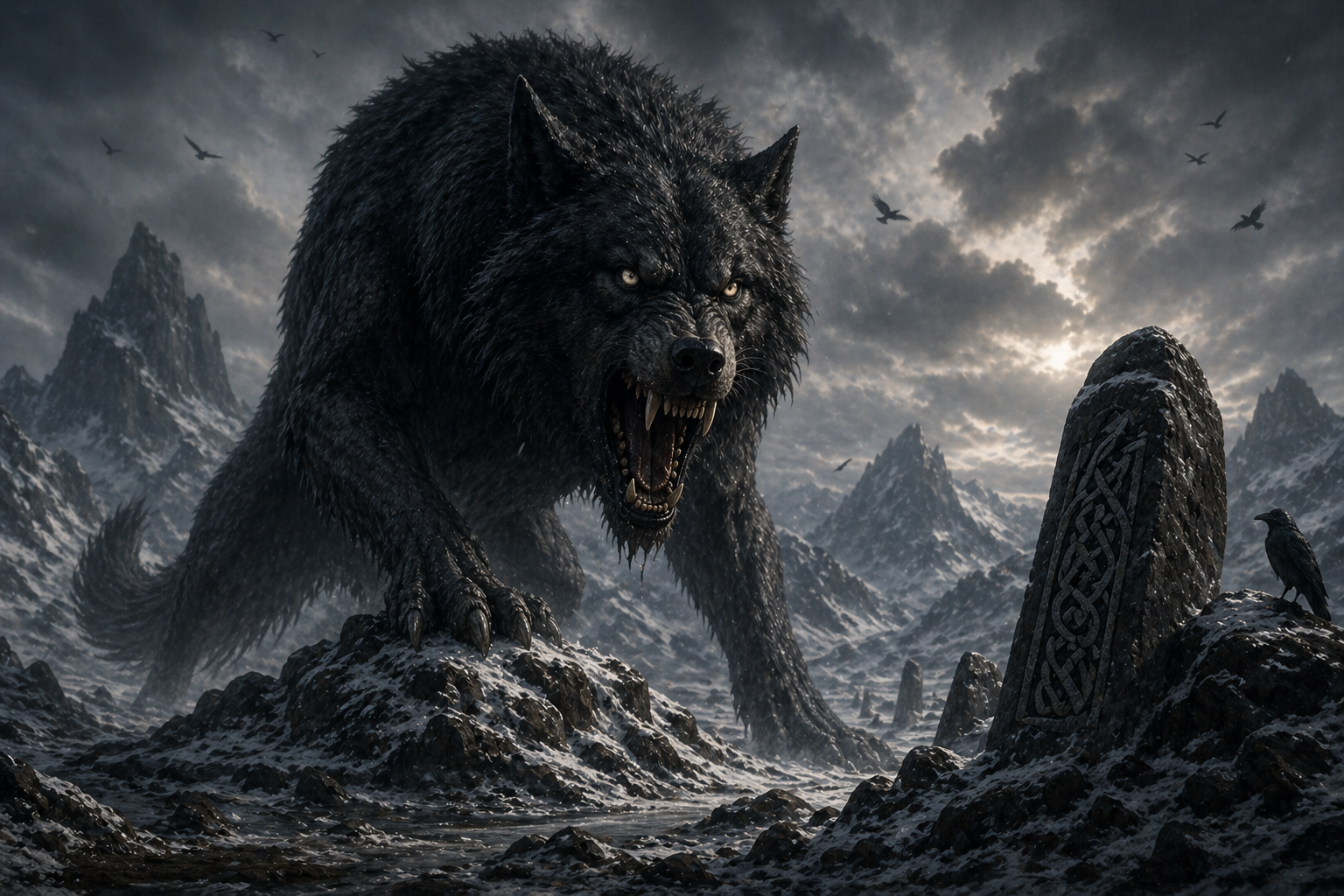
Norse mythology is filled with powerful and imposing beasts, but few are as feared as Fenrir, the monstrous wolf destined to bring destruction during Ragnarök.
Known for his immense strength, Fenrir is one of the most important figures in Norse legend. But who exactly is Fenrir, and why was he so feared by the gods themselves?
Read on to learn more about Fenrir and his role in Norse mythology.
Who is Fenrir?
Fenrir is a giant wolf from Norse mythology and the son of the trickster god Loki and the giantess Angrboða. He is also the brother of two other feared beings: Jörmungandr, the world serpent, and Hel, the ruler of the underworld.
From a young age, Fenrir was recognised as a creature of immense power, and the gods quickly grew wary of him. It was foretold that Fenrir would play a central role in Ragnarök, the end of the world, where he would bring chaos and destruction.
Because of this prophecy, the gods chose to raise Fenrir themselves, keeping a close watch on him as he grew stronger. However, even under their supervision, his power became impossible to control.

The Story of Fenrir
As Fenrir continued to grow, the gods became increasingly fearful of what he might become. Determined to prevent the prophecy from coming true, they decided that the only solution was to bind him.
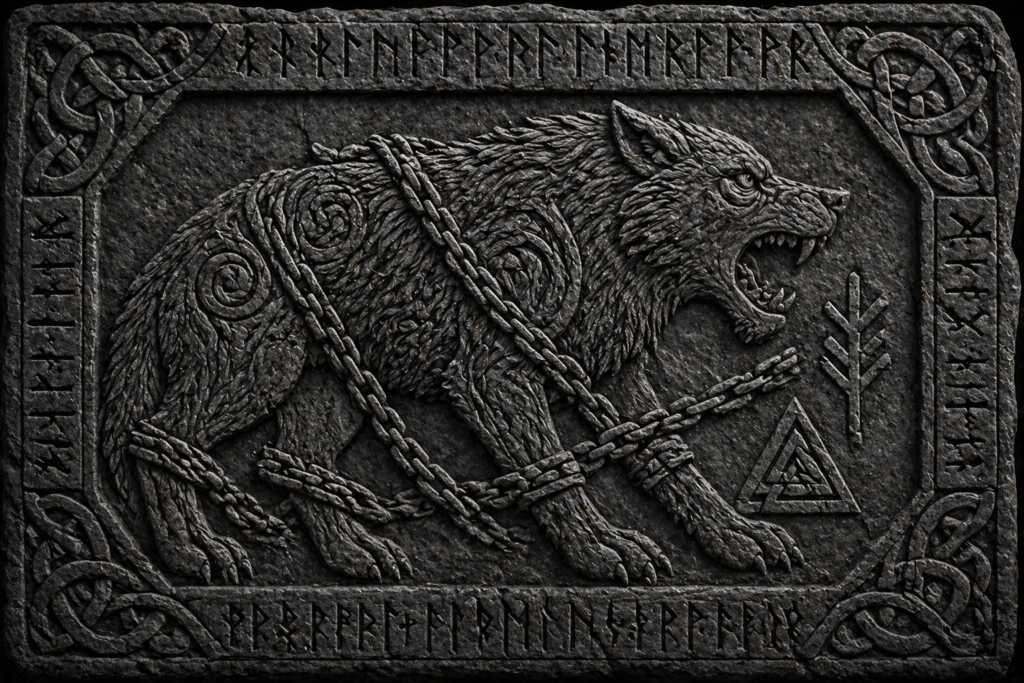
The gods first attempted to restrain Fenrir with heavy chains, but each time he easily broke free, demonstrating his incredible strength. Realising that brute force would not be enough, the gods turned to the dwarves, master craftsmen of the Norse world.
The dwarves forged a magical binding known as Gleipnir, made from impossible elements such as the sound of a cat’s footsteps and the roots of a mountain. Though it appeared thin and harmless, it was stronger than any chain the gods had used before.
Suspicious of the gods’ intentions, Fenrir refused to be bound unless one of them placed their hand in his mouth as a sign of trust. The god Tyr bravely agreed, knowing the risk.
When Fenrir realised he had been tricked and could not break free, he bit down and tore off Tyr’s hand. Bound by Gleipnir, Fenrir remained imprisoned, waiting for the day he would be freed.
Fenrir and Ragnarök
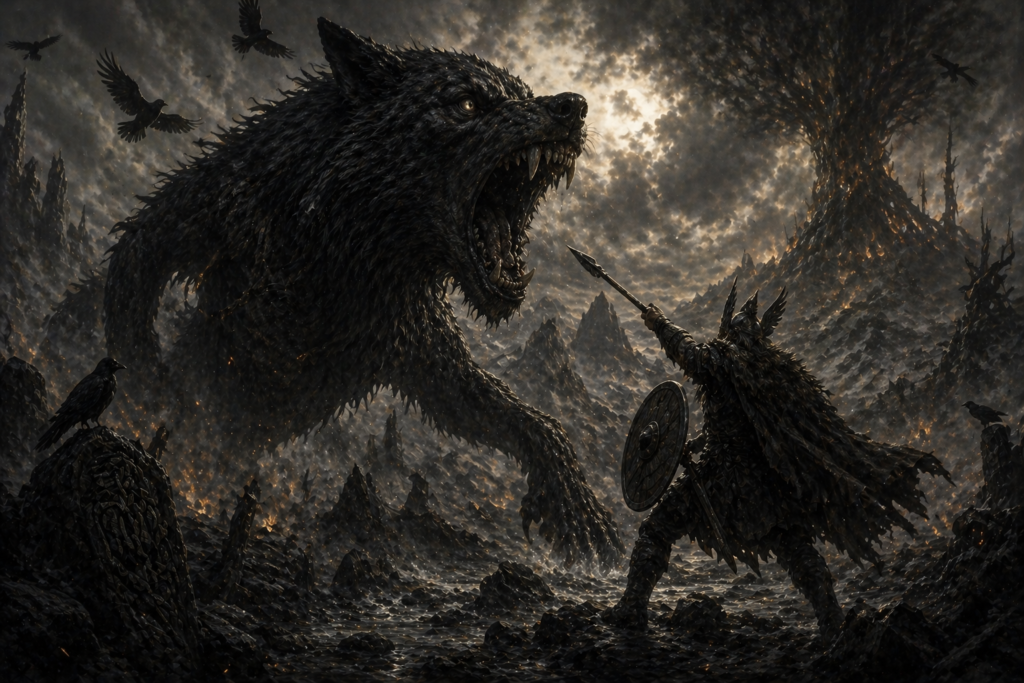
Fenrir’s role in Ragnarök is one of the most dramatic in Norse mythology. When the final battle begins, he will break free from his bindings and unleash his full strength upon the world.
According to legend, Fenrir will face Odin, the king of the gods, and ultimately devour him. This act symbolises the collapse of order and the triumph of chaos during Ragnarök.
However, Fenrir’s destruction does not go unanswered. Odin’s son, Víðarr, is said to avenge his father by killing the wolf, bringing an end to Fenrir’s reign of destruction.
Fenrir’s Powers and Characteristics
Fenrir is not just a large wolf — he is a creature of immense and terrifying power.
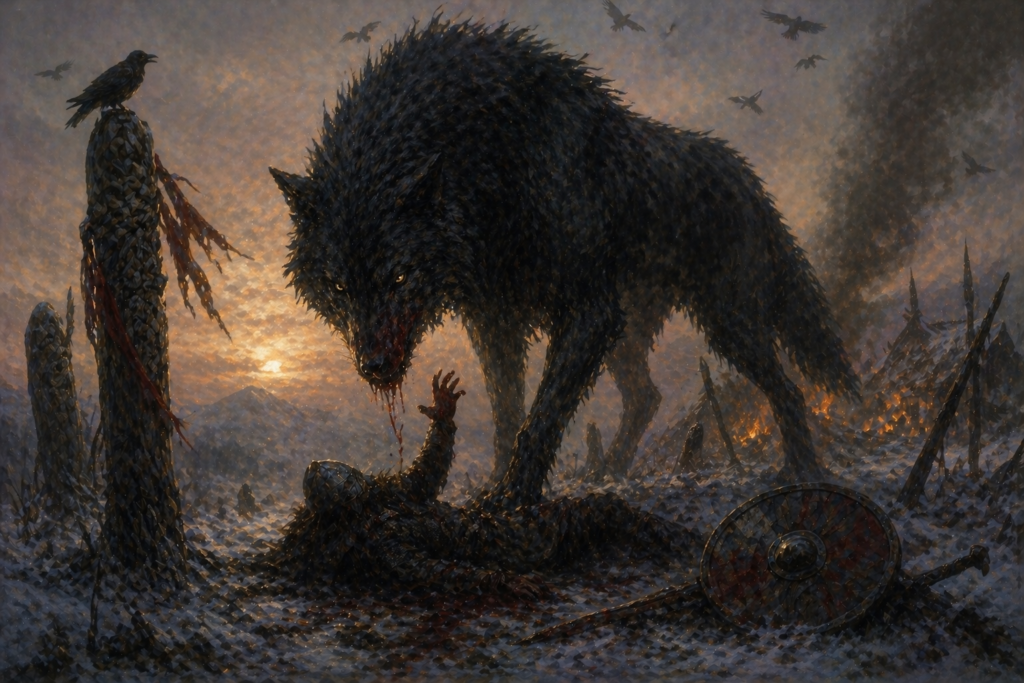
He is described as growing so large that his jaws can stretch from the earth to the sky, making him a truly apocalyptic figure. His strength is unmatched, as demonstrated by his ability to break even the strongest chains created by the gods.
Fenrir also represents a force that cannot be controlled or contained forever. Despite the gods’ attempts to restrain him, his fate is inevitable, and his role in Ragnarök cannot be avoided.
The Meaning of Fenrir
Fenrir represents several key themes in Norse mythology, particularly fate, fear, and the inevitability of destruction.
The gods’ decision to bind Fenrir reflects their fear of prophecy and their attempt to control the future. Ironically, this act of betrayal may be what ultimately ensures that the prophecy comes true.
Fenrir’s story highlights one of the central ideas of Norse mythology: that fate cannot be escaped, no matter how powerful or determined one may be.
Get in Touch
Thanks for reading our article on Fenrir, the fearsome wolf of Norse mythology and one of the key figures of Ragnarök.
If you enjoyed learning about Fenrir, you might also be interested in learning about the different norse realms.
If you have any thoughts, questions, or favourite Norse myths, feel free to leave a comment below — we’d love to hear from you.
You can also get in touch at richard@mythologyplanet.com if there’s anything you’d like to ask or if there’s a topic you’d like us to cover next.
If you’d like to learn more about Fenrir and his role in Ragnarök, check out the YouTube video below.