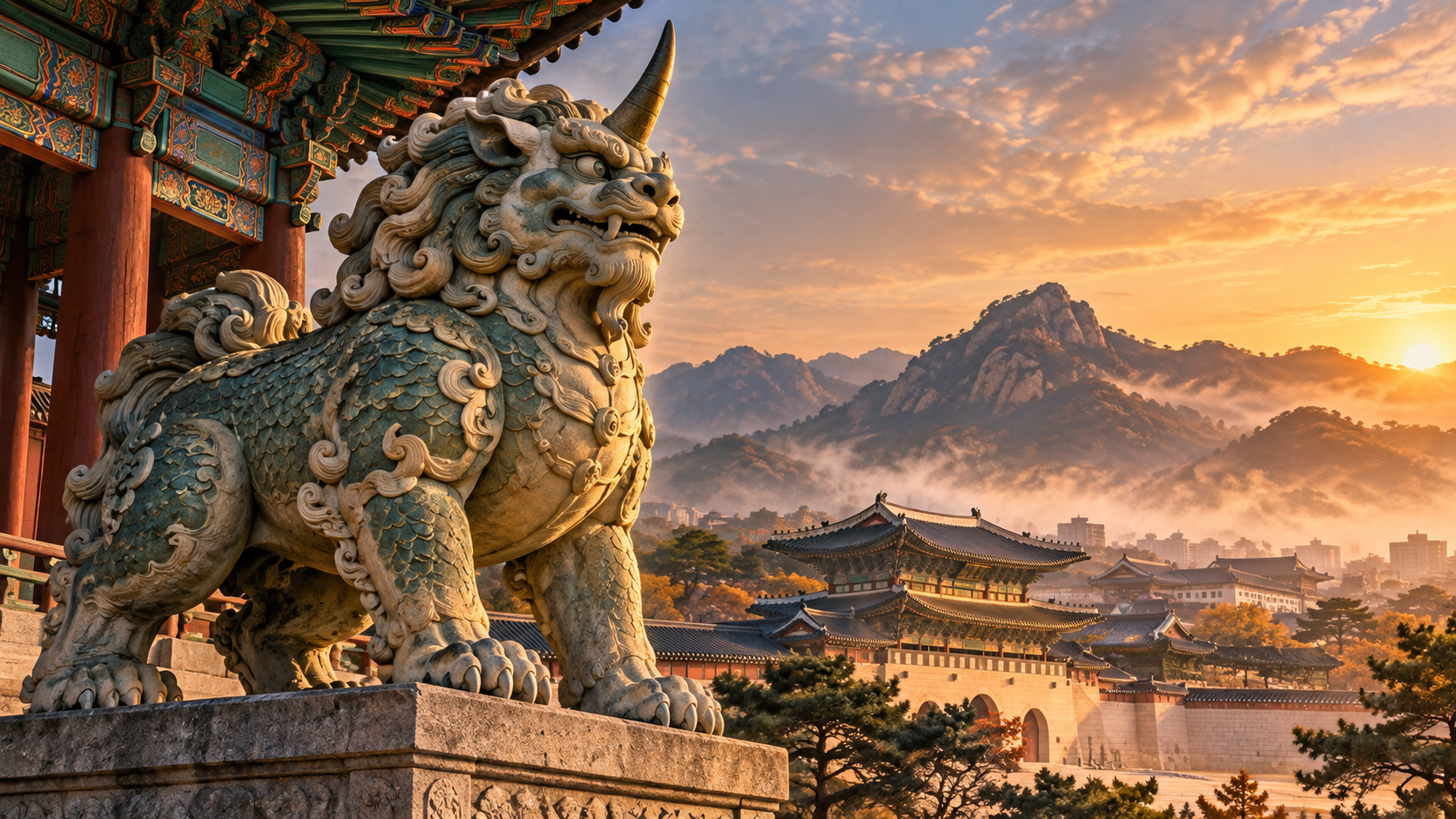
The Haetae (해태), also known as Haechi (해치), is a mythical creature from Korean folklore associated with justice, protection and good fortune. Often described as a Korean lion, it is typically depicted as a horned, lion-like beast with scales and a powerful body.
Haetae was believed to recognise wrongdoing and protect against fires and misfortune. Its image has guarded Korean palaces for centuries, and it remains one of Seoul’s most recognisable symbols.
What Does a Haetae Look Like?
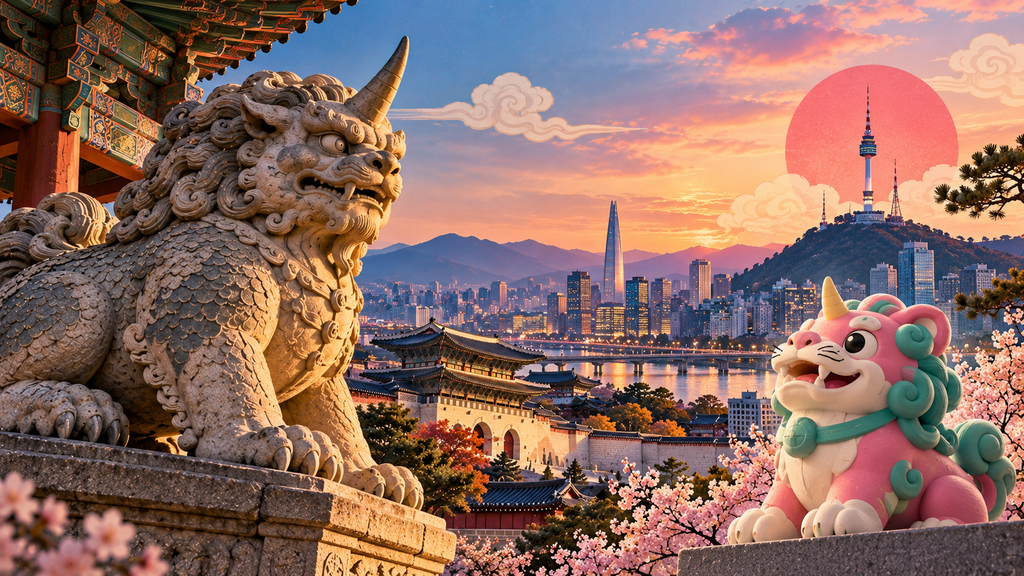
Haetae is usually portrayed as a four-legged creature resembling a lion, sometimes with a single horn, curling mane and scaly body. Its appearance varies between traditional illustrations and sculptures, with some looking fierce and others surprisingly friendly.
The famous stone Haetae statues in Seoul have broad faces and sturdy bodies, resembling a mixture of lion, dog and other animals. These features make them distinctive among the mythical creatures of East Asia.
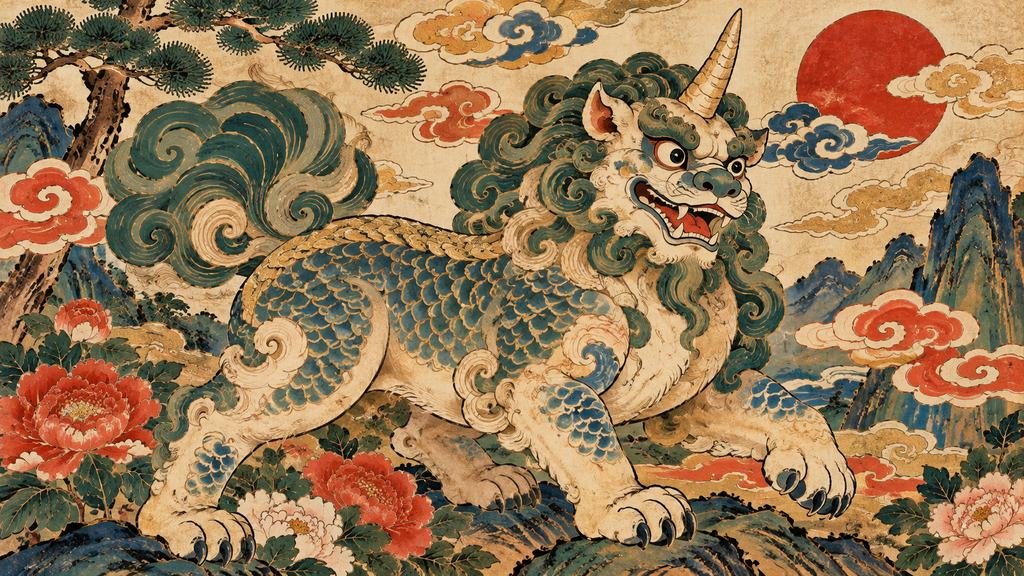
Haetae and the Power to Recognise Evil
One of Haetae’s most remarkable abilities was its supposed power to distinguish right from wrong.
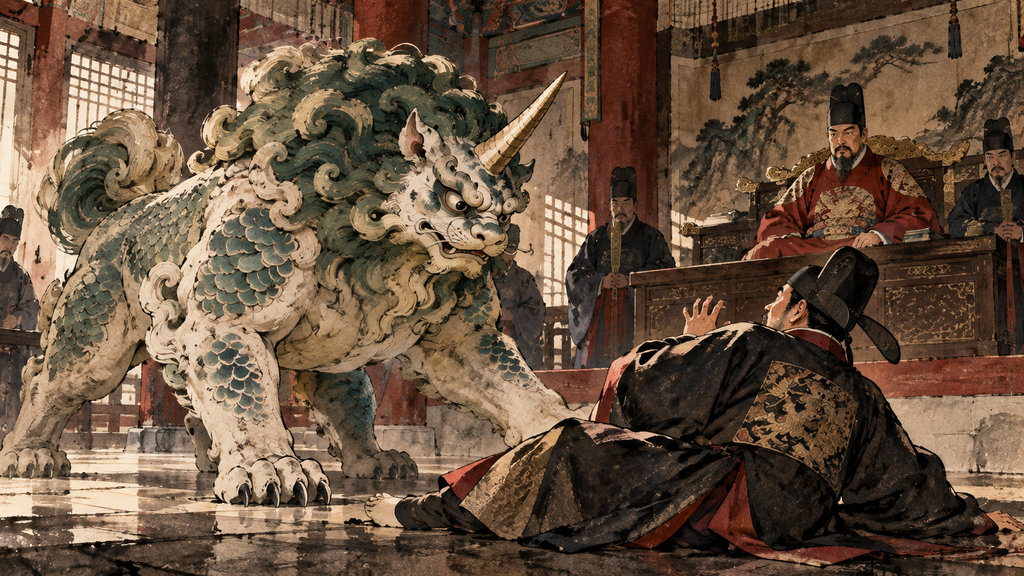
The creature is closely related to the Chinese xiezhi (獬豸), a mythical beast said to identify guilty people and strike them with its horn. This association with justice spread to Korea, where Haetae became a symbol of fairness and moral authority.
During the Joseon dynasty, Haetae appeared on the embroidered insignia of certain officials responsible for overseeing government conduct. Its image represented the impartial judgement expected of those in positions of authority.
Unlike the mischievous Dokkaebi of Korean folklore, Haetae was generally regarded as a protective creature, trusted to confront wrongdoing and guard important places.
Why Does Haetae Protect Against Fire?
Haetae’s connection with fire protection is particularly important in Korean tradition.
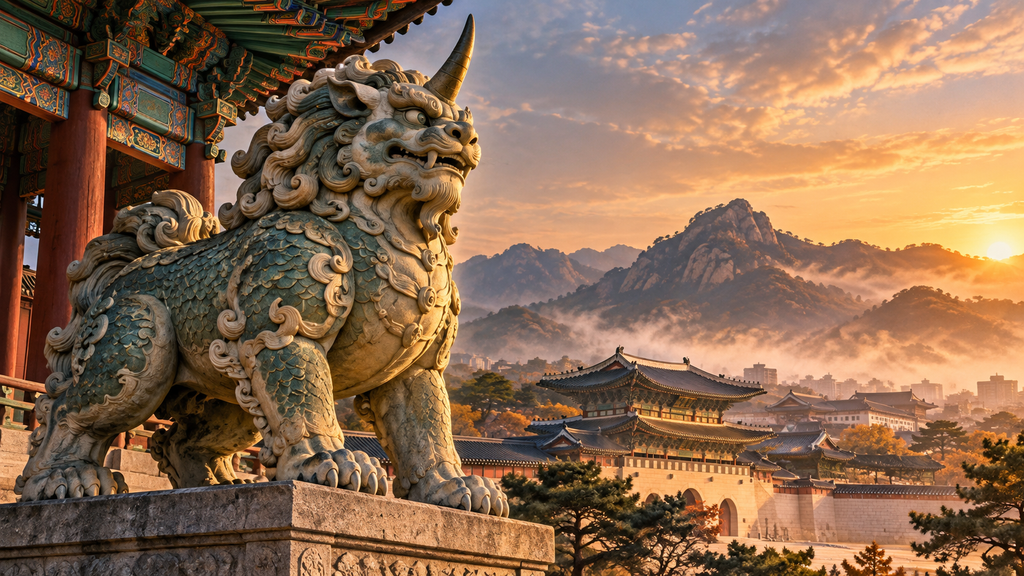
South of Seoul stands Gwanaksan Mountain, whose jagged peaks were traditionally believed to resemble flames. According to Korean geomantic beliefs, the mountain carried dangerous fire energy that threatened Gyeongbokgung Palace and its wooden buildings.
To counter this danger, stone Haetae statues were placed near Gwanghwamun, the palace’s main gate. They were believed to help protect the royal complex from fires and other misfortunes.
The statues also served as symbolic guardians of the palace grounds. Their presence illustrates how mythology, architecture and traditional beliefs were closely connected in Korea.
The Haetae Statues of Seoul
The stone Haetae associated with Gwanghwamun are among Korea’s best-known depictions of the creature.
The statues are connected with the nineteenth-century reconstruction of Gyeongbokgung Palace. Although often described as protectors against fire, they also helped mark and guard the boundaries of the royal complex.
Today, they remain an important reminder of Haetae’s historical role in Korean culture, where mythical guardians were believed to offer protection to both buildings and the people within them.
Haechi: The Modern Symbol of Seoul
Haetae remains popular in South Korea, particularly in Seoul, where it was adopted as an official city symbol in 2008. A friendly mascot called Haechi followed in 2009, representing safety, fairness and good fortune.
The mascot was redesigned in 2024, with a pink-and-mint appearance and a group of companion characters called Hechi & Soul Friends.
From royal palace guardians to modern city mascots, Haetae has remained a symbol of protection and justice for generations.
Get in Touch
Have you encountered Haetae in Korean mythology or seen its famous statues in Seoul? I’d love to hear your thoughts.
Leave a comment below, or contact me at richard@mythologyplanet.com.
Perfectly balanced between detail and simplicity.
Thanks for reading. Look out for new articles coming soon!