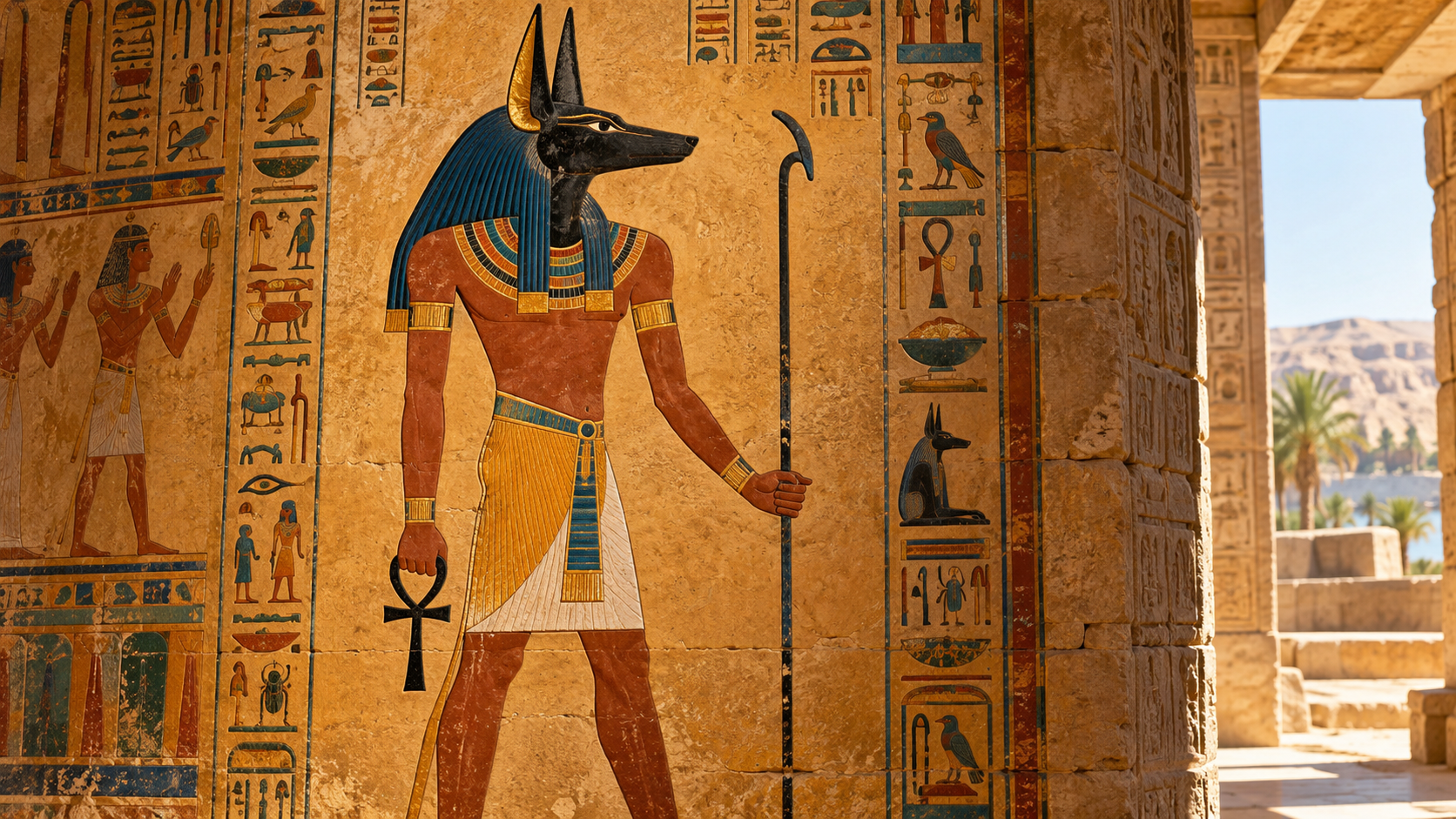
With the head of a black jackal and the body of a man, Anubis is one of ancient Egypt’s most recognisable gods. He appears throughout Egyptian funerary art, watching over the dead and their journey into the afterlife.
Although often called the god of death, Anubis didn’t bring death upon people. He protected the deceased, oversaw mummification and helped them navigate the dangers beyond the tomb.
Who Was Anubis in Egyptian Mythology?
Known to the ancient Egyptians as Inpu or Anpu, Anubis was one of their oldest funerary deities. He was associated with cemeteries, embalming and the protection of the dead from the earliest periods of Egyptian civilisation.
Before Osiris became the dominant ruler of the underworld, Anubis held a particularly prominent position among the gods of the dead. As Egyptian beliefs developed, their roles became complementary: Osiris ruled the afterlife, while Anubis prepared and guided those entering it.
Anubis was also worshipped at Cynopolis in Middle Egypt, whose Greek name means City of Dogs.
Why Did Anubis Have a Jackal’s Head?
Jackals and other wild canids were associated with the desert edges where ancient Egyptians buried their dead. Some scavenged around graves, making them a natural symbol of the dangers facing the deceased.
By placing a powerful jackal-headed god in charge of burial grounds, the Egyptians may have transformed that threat into a source of protection.
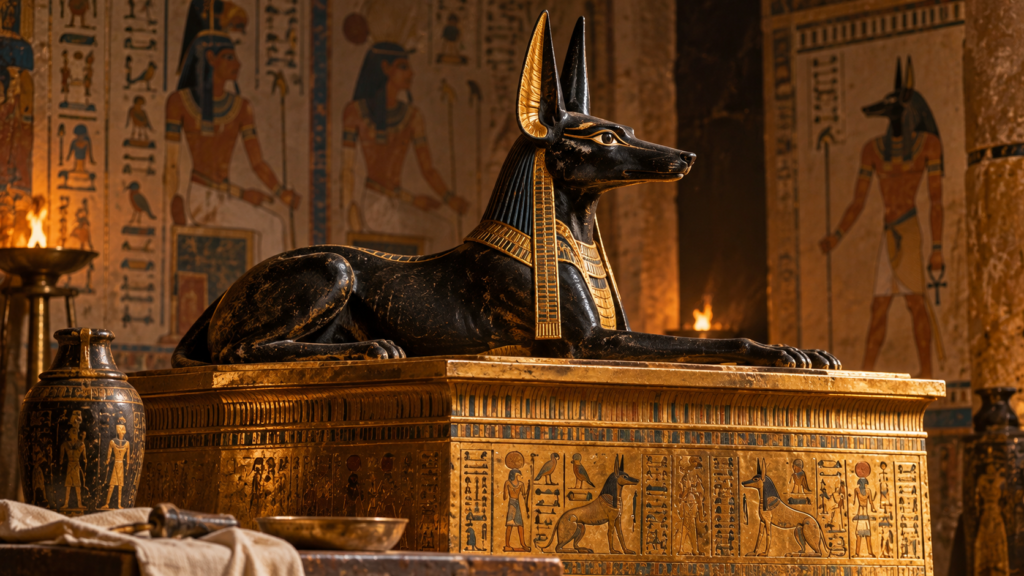
Anubis appeared either as a man with a canine head or as a reclining black jackal, like the figure seen in this ancient Egyptian statue of Anubis.
His black colouring was symbolic. It evoked the fertile soil deposited by the Nile, regeneration and the darkened appearance of preserved bodies. Rather than representing evil, it suggested the possibility of renewed life.
Anubis wasn’t the only Egyptian deity whose animal features expressed divine qualities. You can read more about this in our article on why Egyptian gods had animal heads.

What Was Anubis’s Role in Mummification?
The Egyptians believed that preserving the body helped ensure continued existence after death. Mummification was therefore a sacred process, not simply a way of preventing decay.
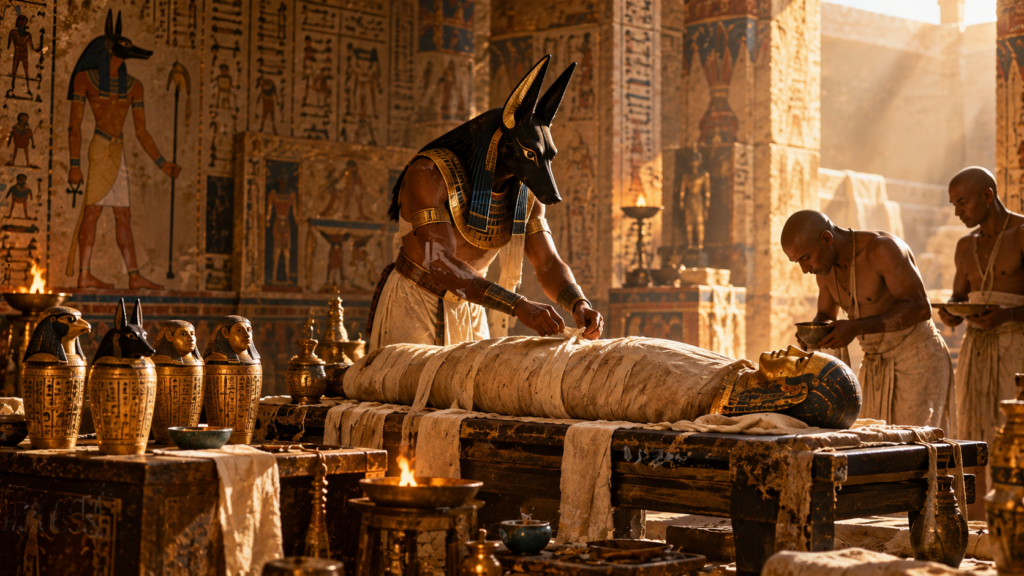
Anubis oversaw embalming and the rituals that prepared the deceased for the afterlife. During some funerary ceremonies, priests wore masks representing him, symbolically carrying out his duties.
Egyptian art frequently shows Anubis tending to a mummy on a funerary bed. His presence offered reassurance that the body would be protected and the proper rites performed.
For grieving families, this was no small comfort. Anubis represented the hope that their loved ones would survive death and reach the next world safely.
Did Anubis Judge the Dead?
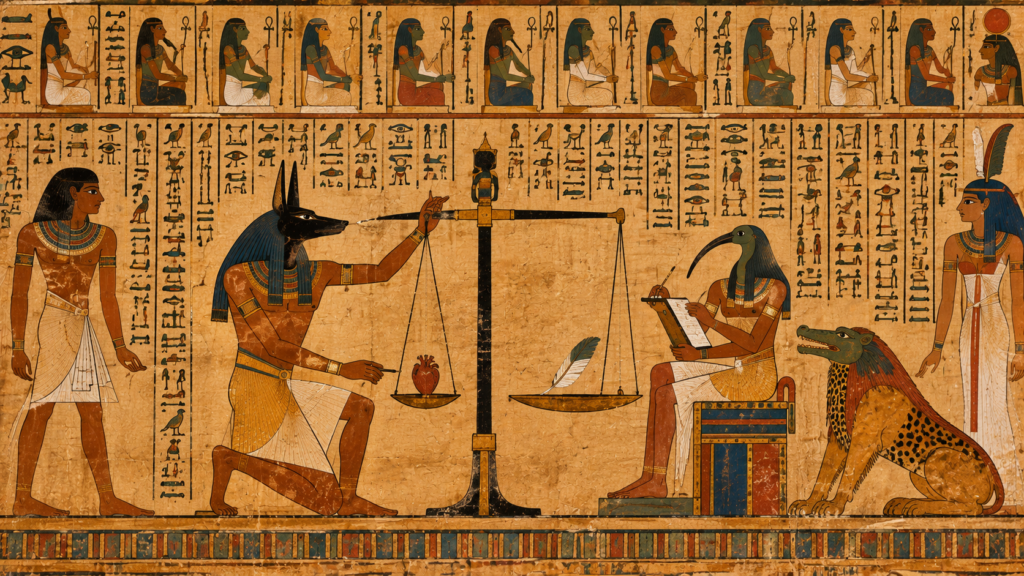
One of Anubis’s most famous roles appears in the weighing of the heart, a ritual described in Egyptian funerary texts such as the Book of the Dead.
The Egyptians believed the heart held a person’s thoughts and moral character. After death, it could be weighed against the feather of Ma’at, representing truth and cosmic order.
Anubis guided the deceased to the scales and supervised the weighing. In the Book of the Dead of Hunefer, he appears beside the balance while the ibis-headed god Thoth records the result.
Waiting nearby was Ammit, a fearsome creature combining the features of a crocodile, lion and hippopotamus. If the deceased failed the judgement, she could devour their heart, denying them continued existence.
Those who passed could proceed towards Osiris and the blessed afterlife.
Anubis wasn’t the sole judge of the dead, then. He guided the deceased and oversaw the scales, while Osiris presided over the realm they hoped to enter.
What Myths Were Told About Anubis?
Anubis’s best-known mythological connection is with Osiris, who was murdered by his brother Set.
After Isis recovered her husband’s body, Anubis was associated with preparing it for burial. His involvement helped establish the divine model for the mummification rituals later performed for ordinary Egyptians.
The Metropolitan Museum’s discussion of Egyptian funerary beliefs explores his role in restoring Osiris and protecting the dead.
Accounts of Anubis’s parentage vary. Some traditions identify him as a son of Ra, while a later account describes him as the child of Osiris and Nephthys, subsequently cared for by Isis.
Such differences reflect the long development of Egyptian religion rather than a single, fixed family tree.
Whatever his origins, Anubis remained a guardian of the dead. His task was not to frighten the living, but to protect those making the journey beyond life.
Get in Touch
Anubis might look intimidating, but to the ancient Egyptians he represented protection at one of life’s most uncertain moments.
What fascinates you most about Anubis or the Egyptian afterlife? Get in touch at richard@mythologyplanet.com.
You might also enjoy our article on Sobek, the Egyptian crocodile god.