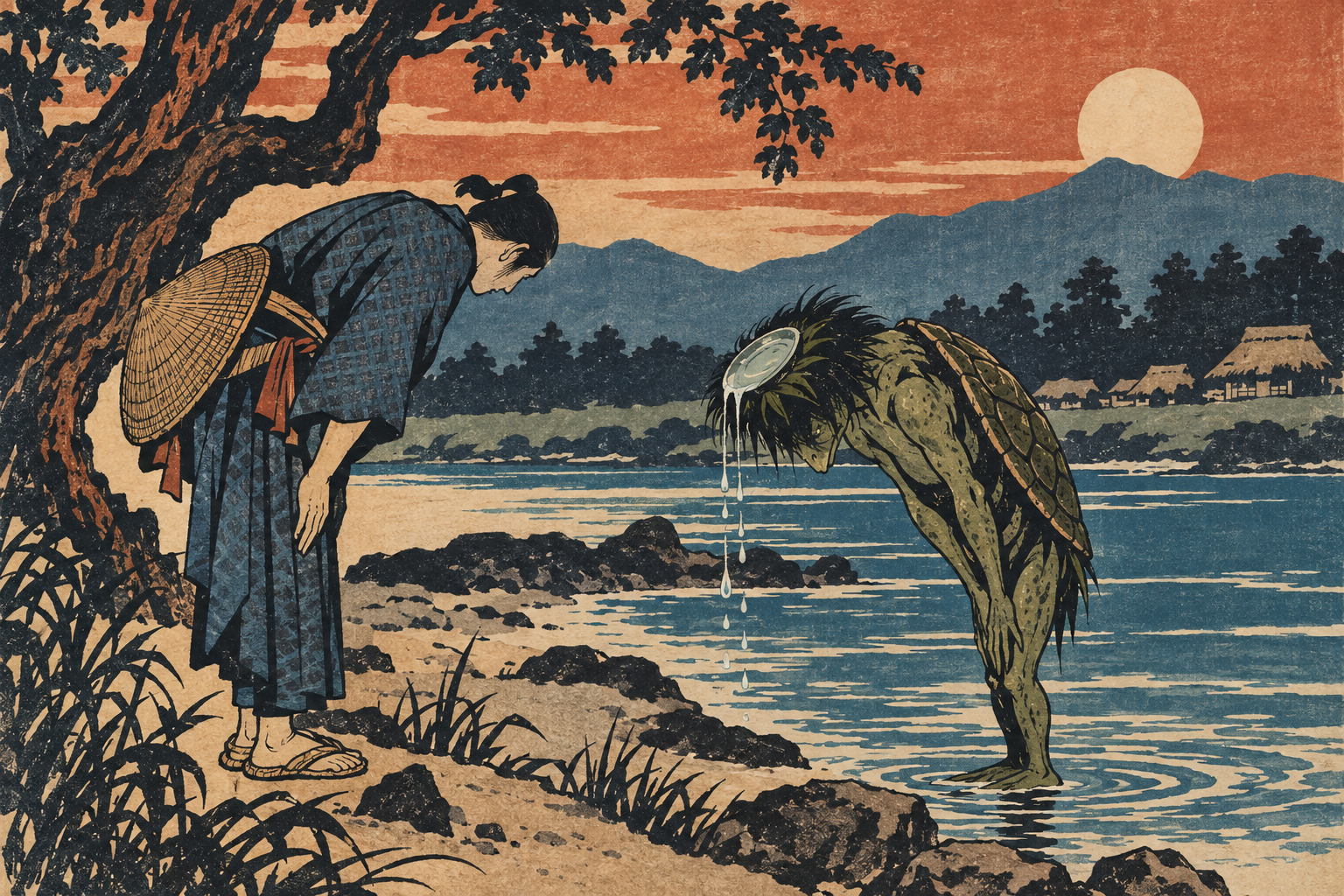
The kappa is one of the most recognisable creatures in Japanese folklore.
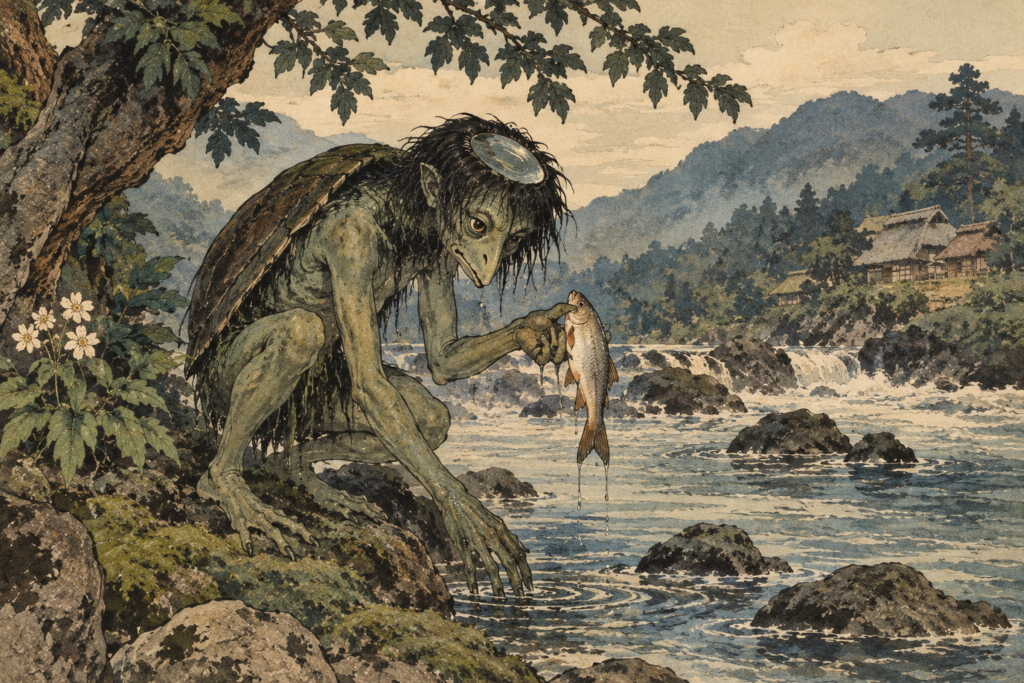
Today, it is usually depicted as a small, green, turtle-like creature with webbed hands and feet, a shell on its back and a strange dish on top of its head. It loves cucumbers, enjoys sumo wrestling and can sometimes be defeated simply by bowing politely.
It all sounds rather charming.
Unfortunately, traditional kappa were also blamed for drowning people, attacking animals and dragging children into rivers.
And the familiar turtle-like creature is only part of the story. Across Japan, people told tales of many different water spirits, some of which looked considerably stranger than the kappa we know today.
What Is a Kappa?
Kappa are yōkai, supernatural beings from Japanese folklore. They are particularly associated with rivers, ponds and other bodies of freshwater.
There has never been one completely consistent description.
Some traditions describe creatures covered in hair. Others make them more monkey-like, amphibian or reptilian. Regional water spirits were known by names including kawatarō, enkō and garappa, and their appearance and behaviour could differ considerably.
Folklorist Michael Dylan Foster notes that western Japanese kawatarō could be depicted as hairy and monkey-like, while the more amphibious image associated with the word kappa eventually became dominant.
One important figure in that process was the Edo-period artist Toriyama Sekien.
His 1776 illustrated yōkai collection, Gazu Hyakki Yagyō, included a web-footed creature peering through plants, labelled simply “Kappa, also called kawatarō.” Sekien’s hugely influential monster books helped shape how later generations imagined many Japanese yōkai.
See Toriyama Sekien’s yōkai at Japan’s National Diet Library
The familiar modern kappa is therefore better understood as the standardised form of a much broader family of Japanese water-spirit traditions.
If you enjoy Japanese yōkai, you might also like our guides to the Tengu and Bakeneko.
Why Does a Kappa Have a Dish on Its Head?
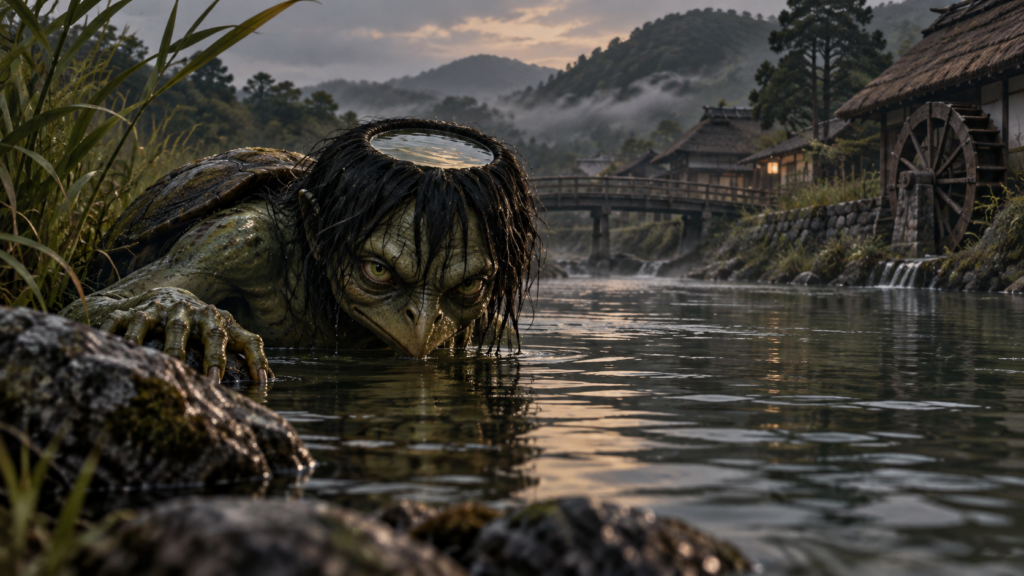
Perhaps the kappa’s strangest feature is the sara, a dish or depression on the top of its head.
This contains water, and the kappa’s supernatural strength is traditionally connected to it. If the water is spilled or allowed to dry out, the creature becomes weakened.
That creates one of the more unusual ways of surviving an encounter with a monster.
Bow to it.
Kappa are often portrayed as highly conscious of etiquette. If a person bows deeply, the kappa may politely bow in return, causing the water to spill from its head.
A Metropolitan Museum of Art publication describing a nineteenth-century kappa netsuke records exactly this tradition: the creature bows in response to a human and loses the liquid that gives it its strength.
Explore the Met’s publication on Japanese netsuke
For once, excessive politeness really might save your life.
The Darker Side of the Kappa
Modern kappa can be cute. Folkloric kappa frequently were not.
They were blamed for pulling people into rivers and drowning them. Children were particularly vulnerable, and horses and other animals could also be dragged into the water.
Japan’s National Diet Library describes kappa as lurking in rivers and ponds, where they might pull children and horses into the water.
Then there is the shirikodama.
According to folklore, this was a mysterious ball or organ believed to exist inside the human anus. Kappa were sometimes said to reach inside their victims and remove it.
Quite what a kappa intended to do with somebody’s shirikodama is rarely explained.
The belief may have developed from observations of drowned bodies, although attempts to give folklore a neat medical origin should be treated cautiously. What matters is that the shirikodama became one of the most gruesome elements of kappa legend.
Compared with that, being challenged to a wrestling match suddenly seems quite appealing.
For another considerably less friendly Japanese supernatural creature, see our article on the Itsumade.
Why Do Kappa Love Cucumbers?
For all their unpleasant habits, kappa have one surprisingly wholesome weakness:
cucumbers.
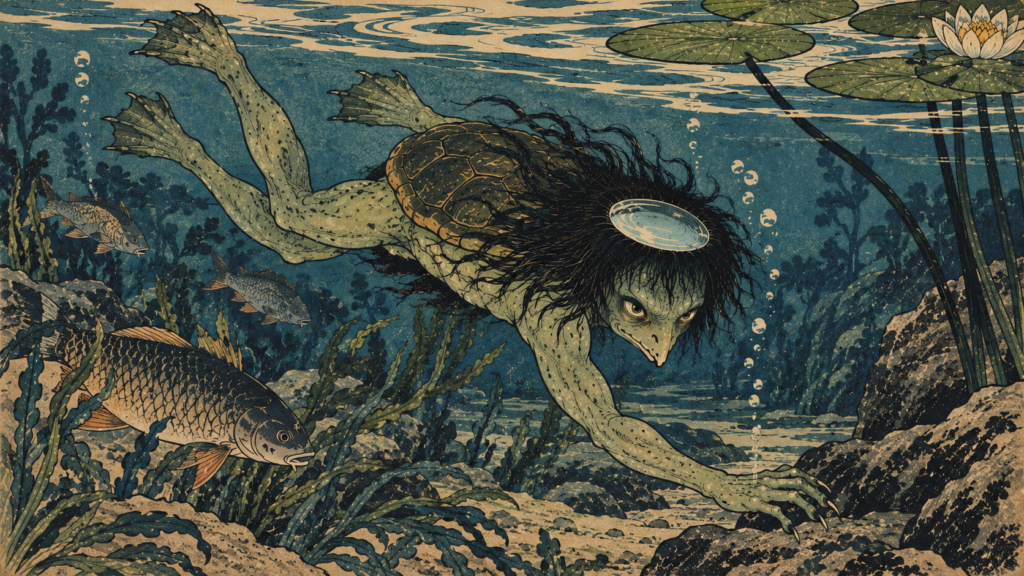
Cucumbers became one of the foods most strongly associated with them. They could be offered to kappa in stories and customs, sometimes as a way of keeping the creatures satisfied and encouraging them to leave humans alone.
The connection survives in Japanese food today.
A simple sushi roll containing cucumber is called kappa-maki — literally linking the dish with the cucumber-loving yōkai.
The association is old enough that the Metropolitan Museum’s discussion of kappa traditions also mentions cucumbers as their favourite food and describes them being thrown into the water to placate the creatures.
It is one of the stranger transformations in folklore: a monster once feared for drowning people has ended up lending its name to sushi.
Kappa, Sumo and Horses
Kappa also have a reputation for loving sumo wrestling.
They challenge humans to matches in numerous tales. A particularly clever opponent can exploit the water-filled dish on the kappa’s head, causing it to spill during the contest and robbing the creature of its strength.
Another recurring group of stories involves horses.
A kappa attempts to drag a horse into the water, only for the animal to overpower it and pull the creature onto land instead.
Once captured, the kappa bargains for its freedom.
Versions of these stories sometimes end with the kappa promising never to harm local people again. In others, it rewards humans with secret knowledge, particularly techniques connected with medicine or setting broken bones.
That combination is characteristic of the kappa.
It can be murderous, ridiculous, helpful and strangely honourable — sometimes within variations of the same story.
That makes it rather different from a creature whose only purpose is to frighten people.
Where Did the Kappa Come From?
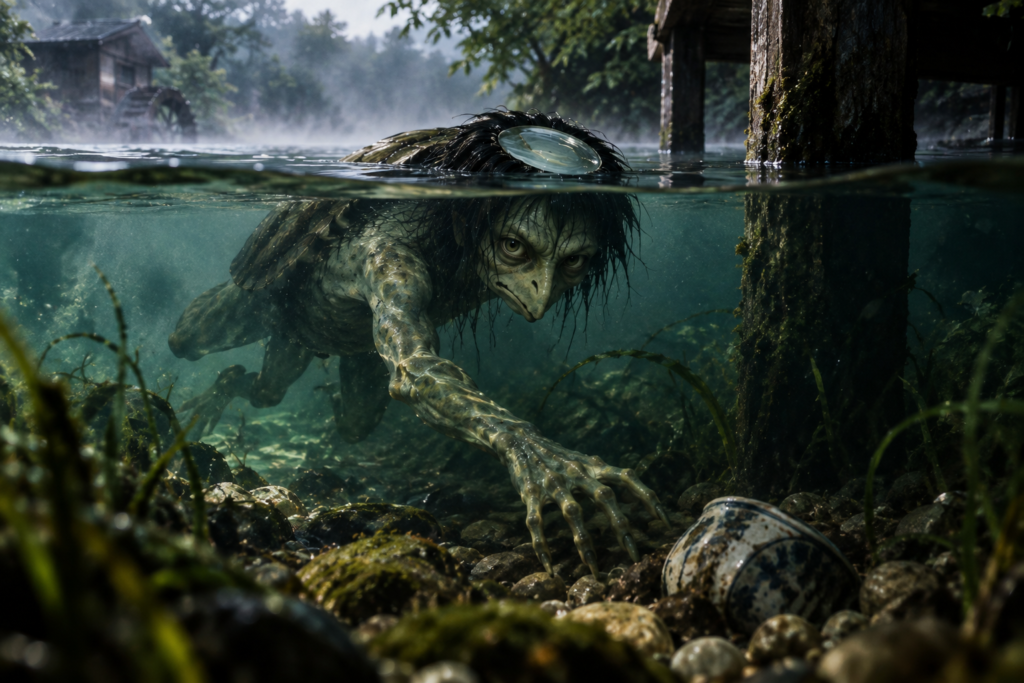
Trying to find a single origin for the kappa is difficult.
Japan has a long history of beliefs concerning rivers, water deities and supernatural beings associated with dangerous places. The creatures eventually grouped under the name kappa developed within that much broader world of local traditions.
Even their appearance varied geographically.
An eighteenth-century account from Bungo, in modern Ōita Prefecture, described kawatarō as roughly the size of five-year-old children and covered in hair. Other depictions gradually emphasised webbed limbs, shells and the distinctive depression on the head.
By the Edo period, printed books and illustrations were helping turn these regional beings into recognisable characters.
Sekien’s Gazu Hyakki Yagyō was especially influential. Published in 1776, it was the first of four books in which he illustrated supernatural creatures from Japanese tradition. Later artists including Utagawa Kuniyoshi and Tsukioka Yoshitoshi continued this rich tradition of depicting yōkai.
The kappa wasn’t invented in 1776.
But works like Sekien’s helped give a diverse collection of water spirits a face that people across Japan could recognise.
That is also something we see elsewhere in Japanese folklore. Creatures such as the Yuki-Onna developed through combinations of regional storytelling, literature and visual art rather than from one definitive ancient text.
From River Monster to Japanese Icon
Today, kappa are everywhere.
They appear in manga, anime, games, advertising, mascots and tourist attractions. Their modern appearance is often far friendlier than the creatures that once haunted rivers and ponds.
Yet much of the old folklore survives.
The shell. The dish of water. The cucumbers. The sumo wrestling. Even the habit of bowing.
That makes the kappa a particularly good example of how folklore changes without entirely losing its past.
What began as a varied collection of dangerous regional water spirits gradually became one of Japan’s most recognisable yōkai.
Just remember that if you encounter one beside a river, there is a correct order of operations.
Bow politely.
Keep it away from your backside.
And bring a cucumber.
Get in Touch
Have you encountered another version of the kappa legend, or is there a Japanese yōkai you’d like us to explore next?
Get in touch and let us know.
You can contact me at richard@mythologyplanet.com