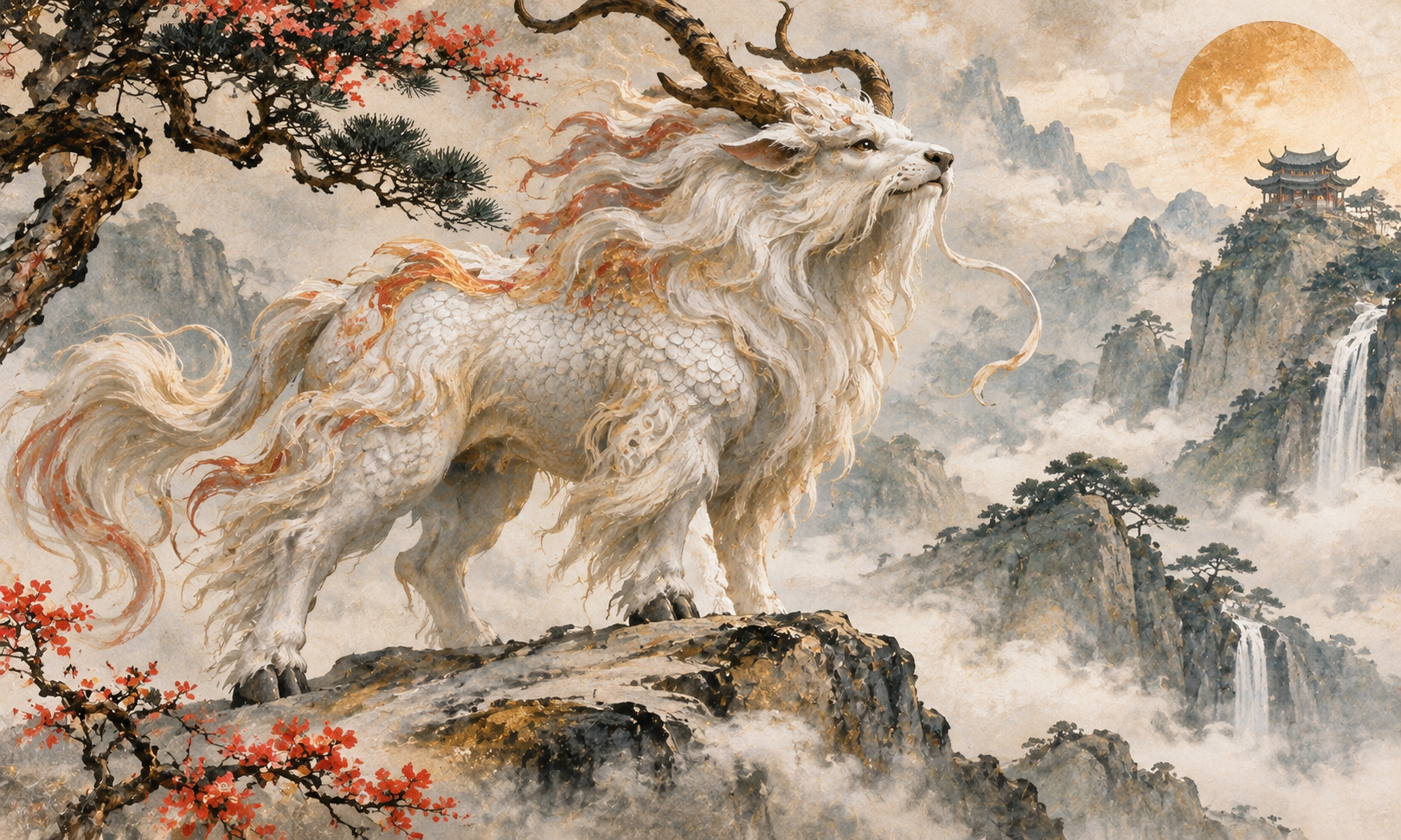
Bai Ze (白澤, also written 白泽) is a legendary creature from Chinese mythology, renowned for its extraordinary knowledge of spirits, monsters and supernatural phenomena.
Unlike many mythical beasts feared for their strength or destructive powers, Bai Ze was valued for its wisdom. According to tradition, it could identify mysterious beings and explain how people might protect themselves from them.
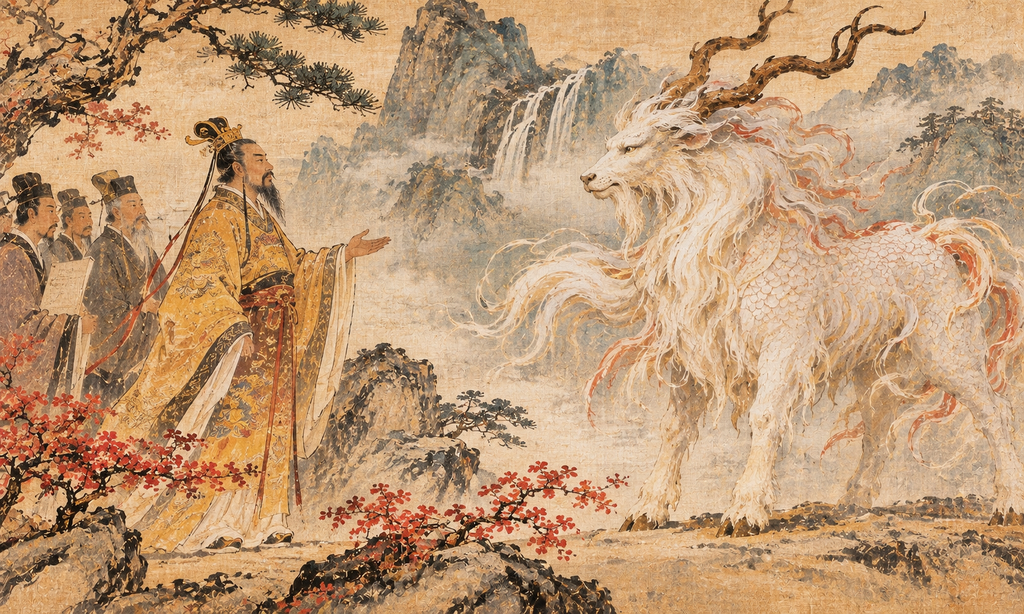
Its most famous story involves an encounter with the Yellow Emperor, one of China’s legendary rulers.
The Origins of Bai Ze
Bai Ze appears in medieval Chinese literature, particularly in accounts associated with the legendary Yellow Emperor, or Huangdi.
According to a tradition preserved in the Yunji Qiqian, a Daoist compilation from the Song dynasty, the emperor encountered Bai Ze while travelling through his realm.
The creature could speak and possessed remarkable knowledge of supernatural beings. When questioned by the emperor, it described 11,520 types of spirits and strange phenomena.
The emperor reportedly ordered this knowledge to be recorded and illustrated, creating a work known as the Bai Ze Tu, or Diagrams of Bai Ze.
The story also appears in earlier literary traditions, including Ge Hong’s Baopuzi. Its historical development is examined in research on the surviving Bai Ze manuscripts.
What Does Bai Ze Look Like?
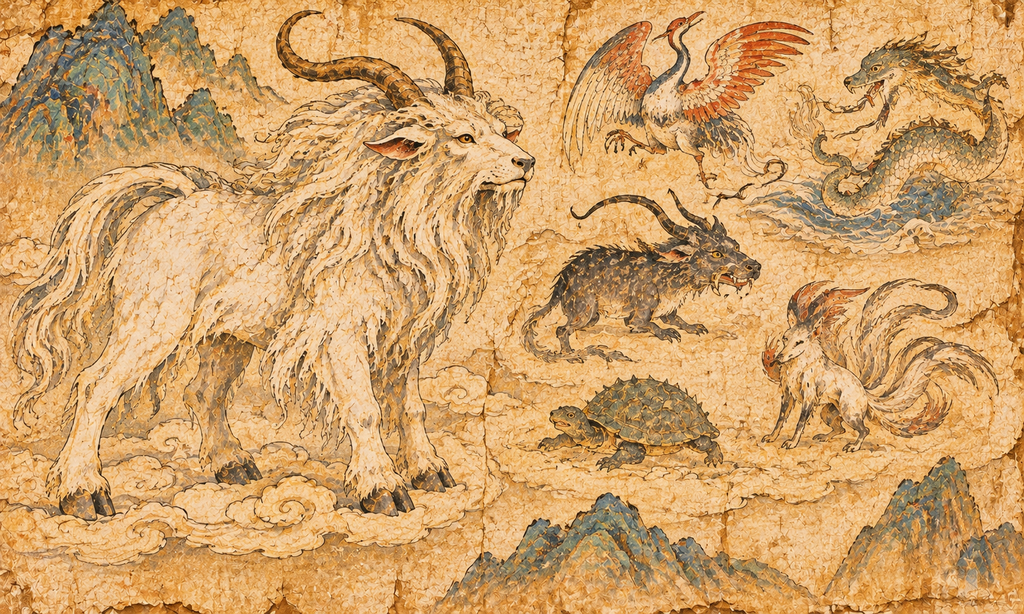
Bai Ze has no single universally accepted appearance.
In Chinese artistic traditions, it has been represented as a fantastic animal combining features of several creatures, including bovine and dragon-like characteristics.
Some early descriptions associate it with an ox-like body and a human face.
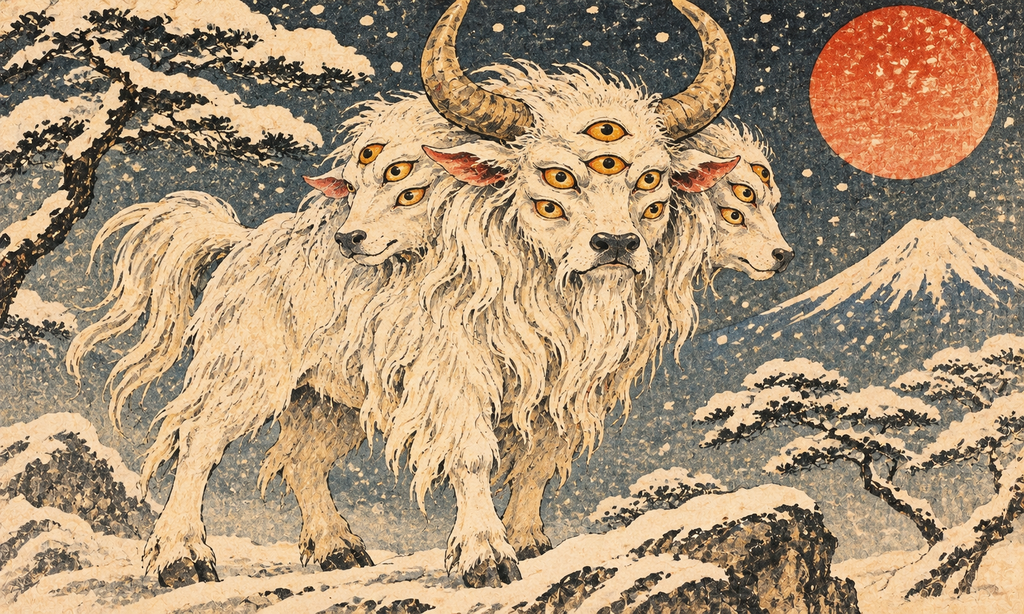
In Japan, where Bai Ze became known as Hakutaku, artists developed particularly unusual representations. These sometimes feature a horned, bovine creature with multiple faces and eyes.
One well-known Japanese form has nine eyes distributed across three faces.
These differences reflect centuries of artistic interpretation rather than a fixed description preserved in one original myth.
Bai Ze and the Yellow Emperor
The encounter with the Yellow Emperor is central to Bai Ze’s significance.
Its knowledge extended beyond identifying supernatural beings. It could also explain their behaviour and the dangers they presented.
This information was valuable because many traditional accounts held that recognising a spirit’s true identity could help prevent it from causing harm.
The legendary Bai Ze Tu therefore became associated with practical protection against supernatural threats.
Although the original work has been lost, related illustrated manuscripts survived at Dunhuang, an important centre along the Silk Road.
These manuscripts describe strange creatures and phenomena, sometimes explaining how to recognise or avoid them.
The International Dunhuang Programme also discusses a surviving painting associated with Bai Ze, illustrating the creature’s importance in Chinese protective traditions.
Bai Ze as a Symbol of Protection
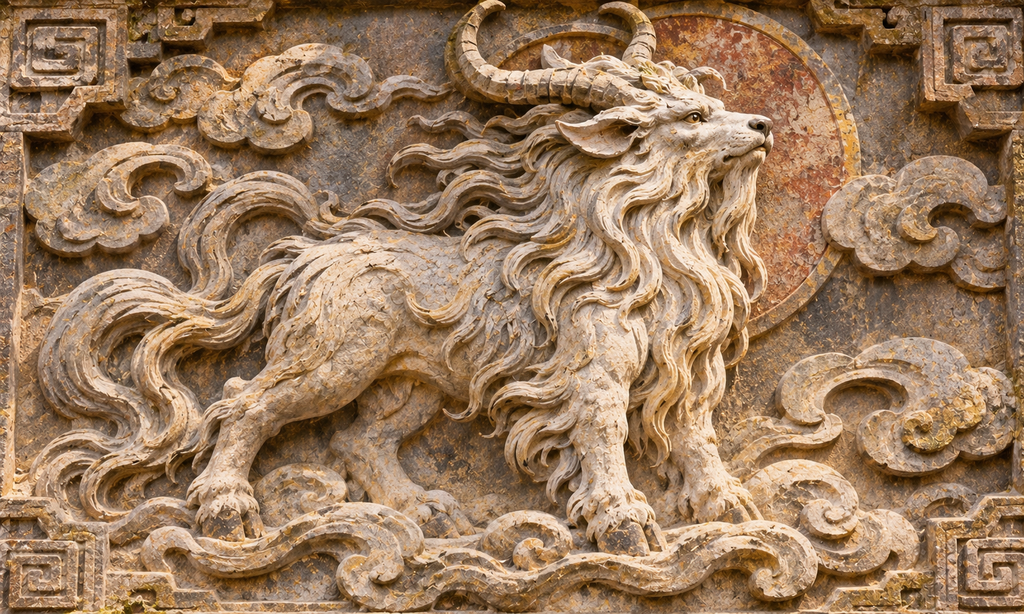
Bai Ze was more than a knowledgeable mythical animal. Its image was also believed to offer protection.
During medieval China, depictions of the creature were displayed in homes to ward off harmful supernatural influences.
This protective function is documented in historical sources from the ninth and tenth centuries.
The association between supernatural knowledge and protection makes Bai Ze particularly distinctive. Rather than defeating dangerous spirits through physical force, it helped people understand and identify them.
For a comparison with another protective mythical creature, see our article on the Haetae of Korean mythology, a beast associated with justice and protection.
Bai Ze and the Japanese Hakutaku
Bai Ze’s influence eventually extended beyond China, particularly into Japanese artistic and religious traditions.
Known in Japan as Hakutaku, the creature retained its associations with supernatural knowledge and protection.
Japanese illustrations often emphasised its unusual appearance, including multiple eyes, horns and a bovine body.
Images of Hakutaku were also used as protective objects, particularly in traditions concerned with illness and misfortune.
The creature’s development across China and Japan demonstrates how a mythological figure can retain its essential characteristics while acquiring new artistic forms and cultural associations.
For further historical detail, Donald Harper’s research on Bai Ze and Hakutaku imagery examines the creature’s representations and protective uses.
Get in Touch
Bai Ze stands apart from many mythical beasts through its extraordinary knowledge of the supernatural world.
Its story offers an interesting glimpse into how people in medieval China understood mysterious creatures and sought protection from them.
Have you encountered another version of Bai Ze or Hakutaku? We’d love to hear from you at richard@mythologyplanet.com.