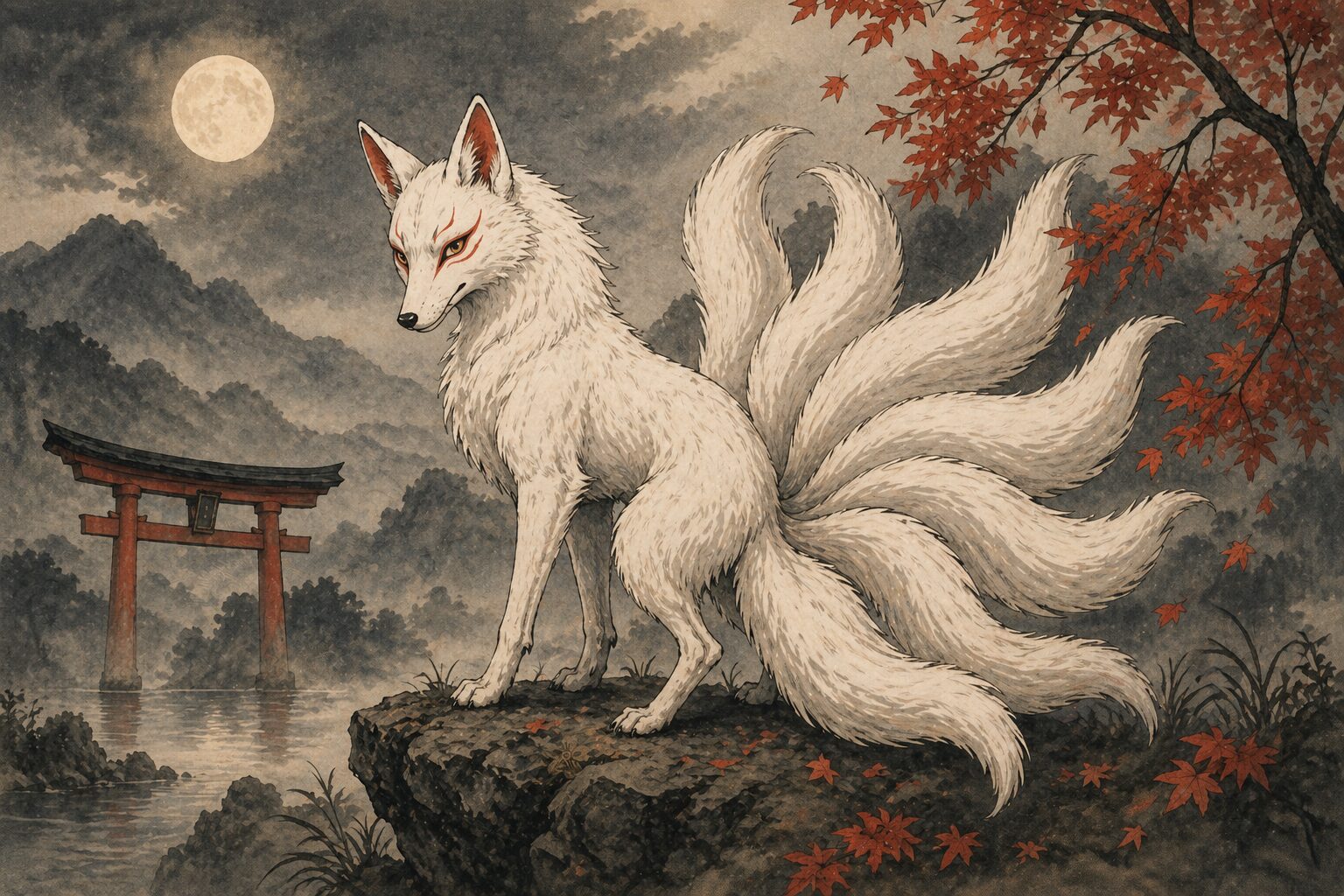
Japanese folklore is filled with strange and mysterious creatures, but few are as fascinating and well-known as the Kitsune.
Often depicted as intelligent fox spirits with supernatural abilities, the Kitsune has become one of the most iconic figures in Japanese mythology. But what exactly is a Kitsune, and why are these creatures so important in Japanese folklore?
Read on to find out more about the Kitsune and its place in mythology.
What is a Kitsune?
The Kitsune is a fox spirit found in Japanese mythology, known for its intelligence, magical abilities, and close association with the Shinto deity Inari.
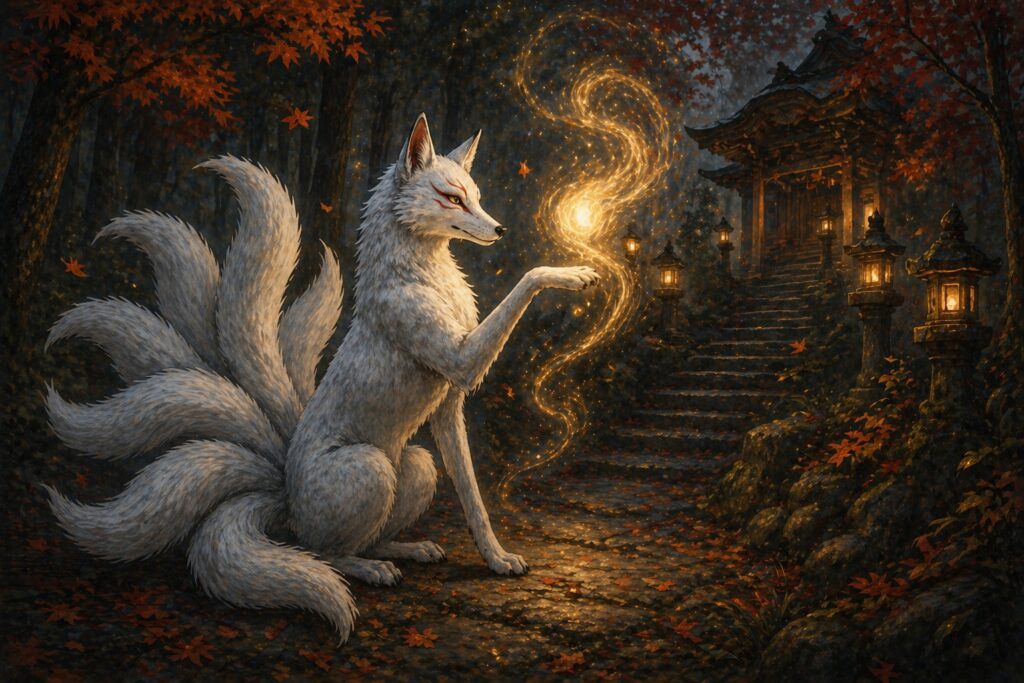
The Kitsune is a form of yōkai and are believed to possess supernatural powers that grow stronger as they age. These powers include shape-shifting, illusion, and even the ability to influence human thoughts and actions.
Kitsune are often depicted as foxes with multiple tails, with the most powerful Kitsune said to have up to nine tails. As they grow older and wiser, they gain additional tails, each representing their increasing strength and knowledge.
The Story of the Kitsune
There is no single story of the Kitsune, as these creatures appear in many different tales across Japanese folklore. However, they are often portrayed in two distinct ways: as benevolent spirits or as mischievous tricksters.
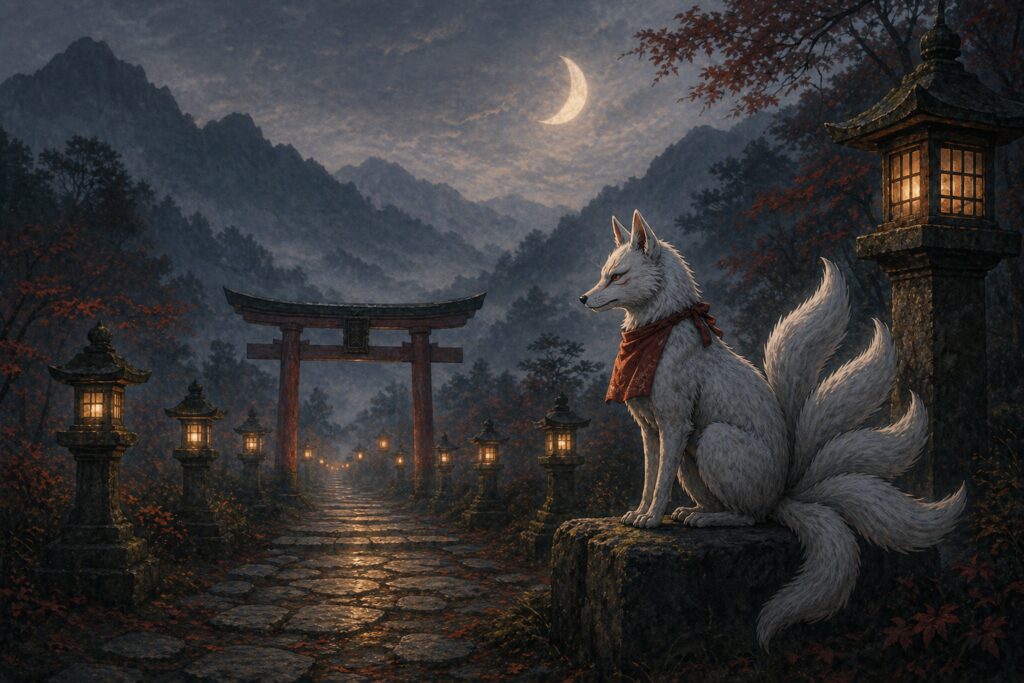
In many traditions, Kitsune are closely associated with the Shinto god Inari, the deity of rice, prosperity, and agriculture. In these stories, Kitsune act as messengers or servants of Inari, protecting shrines and bringing good fortune to those who honour them. Statues of foxes can still be found at Inari shrines across Japan today, reflecting this deep cultural connection.
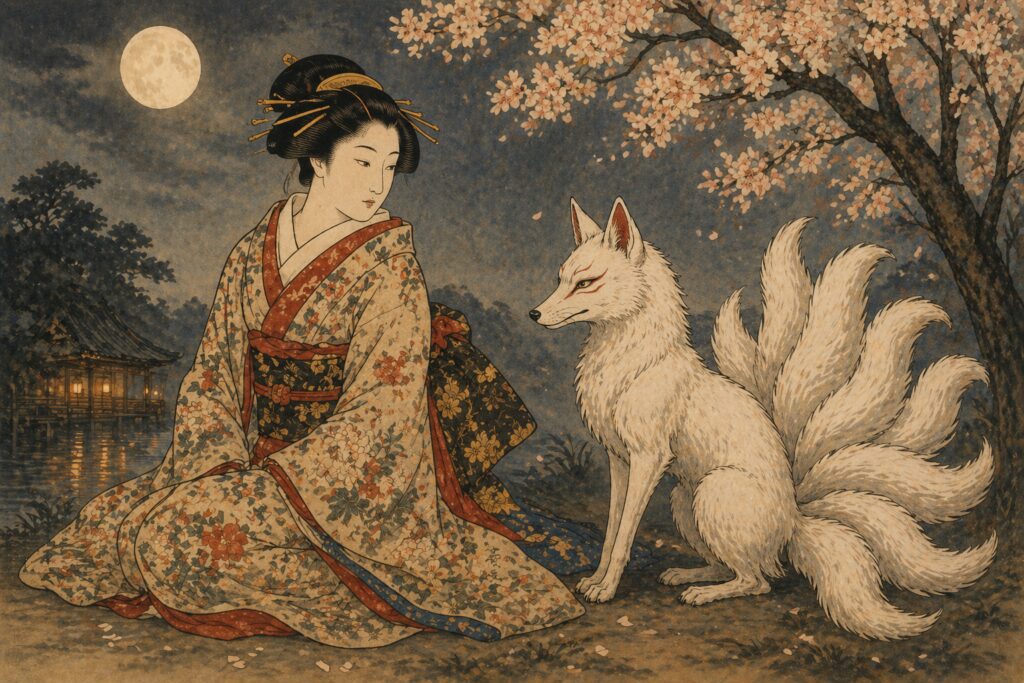
One of the most famous Kitsune stories is that of Kuzunoha, a fox spirit who transformed into a human woman and married a man named Abe no Yasuna. The couple lived happily together and had a child, but her true identity was eventually discovered. Once revealed, Kuzunoha was forced to leave her family, leaving behind a farewell poem before returning to the wild. This story highlights the emotional depth often found in Kitsune legends, where love and loss are common themes.
In other tales, Kitsune are portrayed as tricksters who delight in deceiving humans. These Kitsune may take on human form to play pranks, test individuals, or punish arrogance. Some stories describe Kitsune creating elaborate illusions, while others suggest they can possess humans or lead travellers astray.
Because of these differing portrayals, the Kitsune is often seen as a creature that exists between worlds — capable of both kindness and deception, depending on the story being told.
Kitsune Powers and Abilities
Kitsune are known for a wide range of supernatural abilities, making them one of the most powerful creatures in Japanese mythology.
One of their most famous abilities is shape-shifting, allowing them to transform into human form. In many stories, Kitsune take on the appearance of women, sometimes forming relationships with humans without revealing their true identity.
They are also said to possess powerful illusion magic, creating visions and altering perception. Some legends even suggest that Kitsune can possess humans or enter dreams.
As they grow older, their power increases, and the most powerful Kitsune, known as nine-tailed foxes, are considered extremely wise and almost god-like in nature.
Famous Kitsune in Japanese Folklore
Several Kitsune figures have become well known throughout Japanese mythology and folklore, appearing in a variety of stories and legends.
One of the most famous is Kuzunoha, whose story tells of love, family, and eventual separation after her true identity as a fox spirit is revealed. Her tale remains one of the most well-known and emotionally powerful Kitsune stories.
Another notable figure is Tamamo-no-Mae, a far more sinister Kitsune who is said to have disguised herself as a beautiful woman in the imperial court. According to legend, she manipulated those around her and brought chaos to the court before her true nature was discovered. Tamamo-no-Mae is often portrayed as a powerful and dangerous nine-tailed fox, representing the darker side of Kitsune mythology.
These contrasting figures reflect the dual nature of the Kitsune, which can be both benevolent and destructive depending on the story being told.

The Meaning of the Kitsune
The Kitsune represents several important themes in Japanese mythology, including intelligence, mystery, and the blurred line between the natural and supernatural worlds.
In some stories, the Kitsune is seen as a protector and a symbol of good fortune, particularly when associated with the god Inari. In others, it represents deception and the unpredictable nature of the world.
This dual nature is one of the reasons why the Kitsune remains such a compelling figure in Japanese folklore.
hese contrasting figures reflect the dual nature of the Kitsune, which can be both benevolent and destructive depending on the story being told.
Get in Touch
Thanks for reading our article on the Kitsune, one of the most well-known and mysterious creatures in Japanese mythology.
If you enjoyed learning about these fox spirits, you might also like some of our other articles on Yōkai, such as the Yuki Onna.
If you have any thoughts, questions, or even your own favourite Kitsune stories, feel free to leave a comment below — we’d love to hear from you.
You can also get in touch at richard@mythologyplanet.com if there’s anything you’d like to ask or if there’s a topic you’d like us to cover next.
For a video take on the Kitsune and its role in Japanese folklore, check out the YouTube video below.